Audi Q5 Engine Lifespan: How Many Miles Before It Wears Out?
Table of Contents
13 ChaptersIntroduction
A healthy Audi Q5 engine lifespan is usually 150,000 to 200,000 miles. Yet the average Q5 leaves the road at around 130,000 miles.
That gap is historical. Two Q5s with the same engine and odometer readings can have dramatically different service lives based on the timeliness of oil changes and whether the weak spots were addressed. Below, we cover each engine, what counts as high mileage, the signs of wear, and how to judge what's left.
How Long Does an Audi Q5 Engine Last?
The Audi Q5 is a reliable model. With proper upkeep, these vehicles can last 150,000-200,000 miles. Neglect can cause wear before 100,000 miles. Driving 10,000 miles a year means these vehicles will last 15 years or more.
Average Audi Q5 lifespan in miles and years
iSeeCars, which analyzed 300 million vehicles, reports the average Audi Q5 lifespan at 131,819 miles, about 11.3 years. Only 5.5% of Q5s reach 200,000 miles.
Vehicle lifespan vs. engine lifespan: why the numbers differ
That 131,819 miles figure is the total distance the Q5 travels, not the distance the engine can travel. The Q5 is usually retired after a big expense is incurred and the vehicle is not worth that much. Often the big expense is due to a failing transmission or some other electronics, not the engine. Plenty of the Q5s go to the scrapyard with an engine that can travel much more than 131,819 miles.
Most say 131,819 is when the average owner gives up, and 150,000 to 200,000 miles is what the engine can travel with proper care.
Audi Q5 Engine Lifespan by Engine Type
We believe the Audi Q5 engine life expectancy is impacted heavily by the engine. The ranges provided below are our estimates for well maintained engines based on owner reports and donor engines we pull. These are not factory estimates.
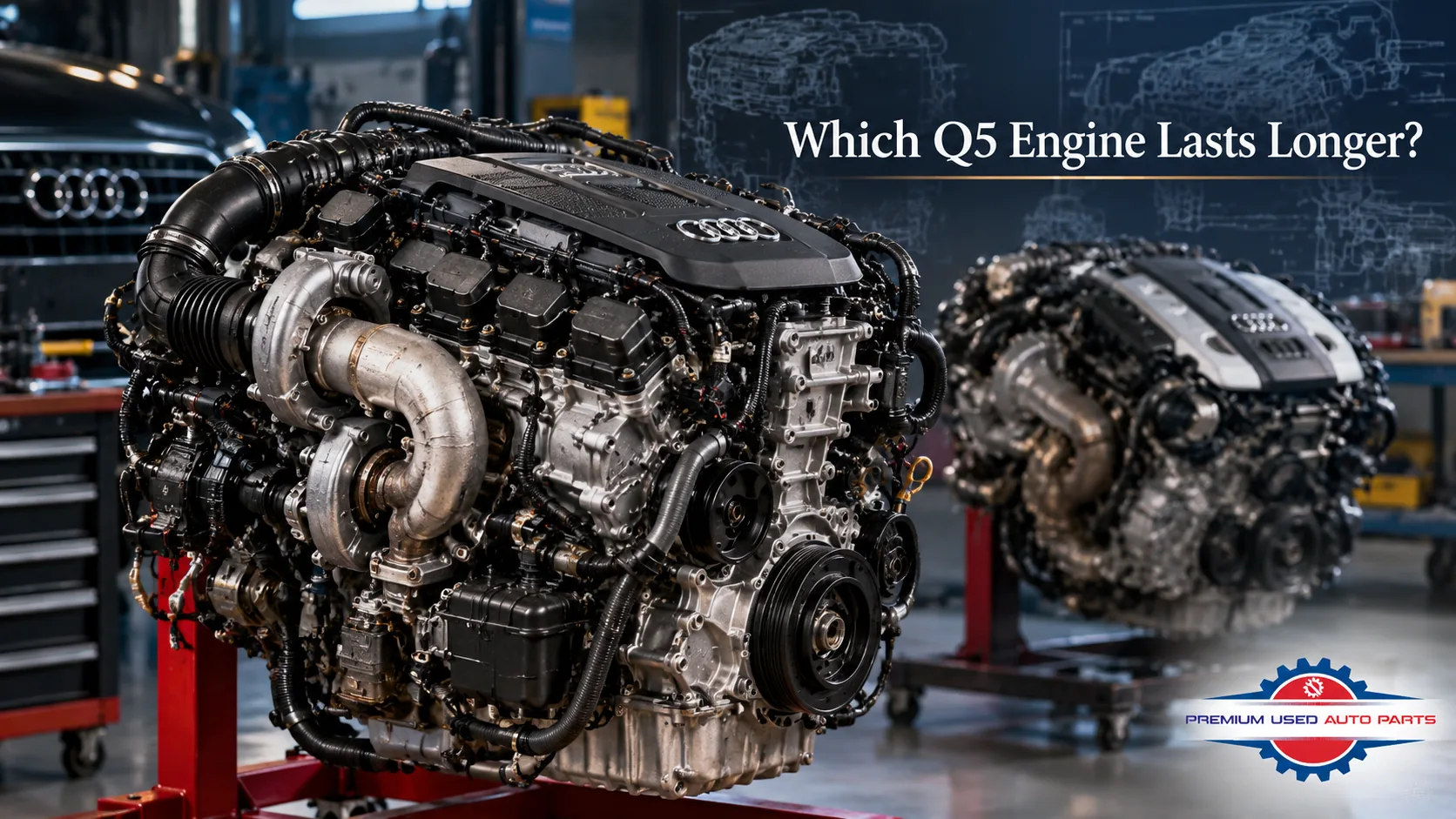
First-generation Q5 engines (2009–2017)
We believe the Audi Q5 engine life expectancy is impacted heavily by the engine. The ranges provided below are our estimates for well maintained engines based on owner reports and donor engines we pull. These are not factory estimates.
The early 2.0T is the one to watch. Audi issued a 2013 service bulletin for high oil consumption on 2009-2011 Q5 2.0T's, and a later class action covered 2012-2017 2.0T pistons and rings. A 2.0T with documented ring work is a much better bet than one without.
The 3.2 V6 doesn't burn oil the same way, but its timing chains sit at the transmission end, so chain wear is a big job. The supercharged 3.0T is the longevity pick of this generation.
Second-generation Q5 engines (2018–2024)
The new 2.0T has no oil-burning issues like the older models, but does have issues with the water pump and thermostat housing. Audi has released service bulletins regarding this, and it is not the end of the world if it gets addressed early.
Current Q5 engines (2025 onward)
The current 2.0T mild hybrid and SQ5 V6 are too new for an honest lifespan figure.
Which Audi Q5 engine lasts the longest?
The 2013–2017 supercharged 3.0T has the best track record. The 2009–2012 2.0T is the most likely to need major internal work before 150,000 miles.
How Long Can a 2019 Audi Q5 Engine Last?
A well-maintained 2019 Audi Q5 engine should reach 150,000 to 200,000 miles. That's our estimate. Few 2019 Q5s have very high miles yet, so the long-term data isn't in.
What engine the 2019 Q5 uses
Every US 2019 Q5 has the 2.0-liter turbo four (252 hp) with a 7-speed S tronic and quattro. The SQ5 uses a 3.0-liter turbo V6. As the second year of the redesign, it benefits from fixes made to the older 2.0T.
Known wear points on 2018–2020 models
Look out for coolant. Water pump and thermostat housing leaks are fairly common, as early as 20,000 to 40,000 miles. Ignore a slow leak at your own hassle. You'll eventually have to replace the engine anyways. Carbon buildup on intake valves is also common and can cause a rough idle past about 60,000 miles. Oil burning is much less common than on older Q5s.
Realistic mileage expectation for a 2019 Q5
With under 60,000 miles, this is a good buy. Expect cooling systems and carbon work, and lean on the records between 60,000 and 100,000 miles. It is still a good buy over 100,000 miles with a full history and a clean compression test.
What Is Considered High Mileage for an Audi Q5?
The general consensus is that Audi Q5s are considered high mileage around 100,000-120,000 miles. A Q5 that has covered 12,000-15,000 miles a year is considered high mileage for its age as well.
There's a fair amount of discrepancy here. Some say high mileage starts at 85,000 miles. Others say it's 150,000. Lower estimates tend to be more common and are usually driven by risk of major repairs. Higher estimates are more common with the consensus being that the engine can likely keep running for that long.
Is 100,000 miles a lot for an Audi Q5?
Not with a full service history. It's a checkpoint, not an end point. A documented Q5 at 100,000 miles is often safer than an undocumented one at 70,000.
Mileage tiers and what each means for the engine
| Mileage | What to expect | What to check |
|---|---|---|
| Under 80,000 mi | Most of its life left | On-time oil changes, open recalls |
| 80,000–120,000 mi | Wear items coming due | Chain noise, coolant level, oil use |
| 120,000–160,000 mi | History matters most | Compression and leak-down test |
| 160,000+ mi | Late life for most engines | Full inspection, plan for major work |
Can an Audi Q5 Engine Reach 200,000 Miles?
Yes, but most don't. With about a 5.5% chance, it's roughly one in eighteen. The ones that make it are rarely lucky.
What Q5 engines that reach 200k have in common
The long-lived engines we pull share the same paperwork: oil every 5,000 to 7,500 miles with the correct VW-approved oil, coolant leaks fixed early, the timing chain tensioner replaced on older 2.0Ts, and mostly highway miles. Nothing exotic. Just consistent.
Why some Q5 engines fail early
Usually it's a timing chain jumping a tooth on an early 2.0T, running low on oil, overheating after an ignored coolant leak, or worn piston rings on a pre-2018 2.0T. The first three are preventable. The fourth is why ring-repair records matter so much in those years.
What Affects Audi Q5 Engine Lifespan?
Oil care and the cooling system matter most. The timing chain, carbon buildup and driving habits come next.
Oil change interval and oil specification
Audi recommends oil changes at 10,000 miles or 1 year. However, due to the hard nature of a turbo on oil, it is recommended to do oil changes at 5,000 to 7,500 miles by independent Audi specialists. Oil with the VW approval number in your owner's manual is recommended. Remember to monitor the oil level in between oil changes.
Timing chain and tensioner care
There's no set replacement interval, but the 2009–2012 2.0T tensioner is a known weak spot. The warning is a rattle for a couple of seconds after a cold start. Avoid prolonged issues that last for months.
Cooling system health
Many Q5 engines are prone to failures in their water pumps or thermostat housings, and the recalls for the 2013-2017 Audi 2.0T Q5 are specifically related to coolant pumps that may overheat. Engine cooling system leaks are common and will not cause engine failure, but coolant system overheating will. Check your coolant reservoir monthly.
Carbon buildup and driving habits
Most Q5 engines rely on direct injection, so carbon builds on the intake valves, often showing up between 60,000 and 100,000 miles. A walnut-blast cleaning fixes it. Short trips are the hardest on an engine, while long highway drives are the easiest.
Climate and storage
Heat ages plastic cooling parts. Cold means more short, hard starts. A Q5 that sat unused for months can have dried seals, so low miles aren't automatically good news.
Signs an Audi Q5 Engine Is Nearing the End of Its Life
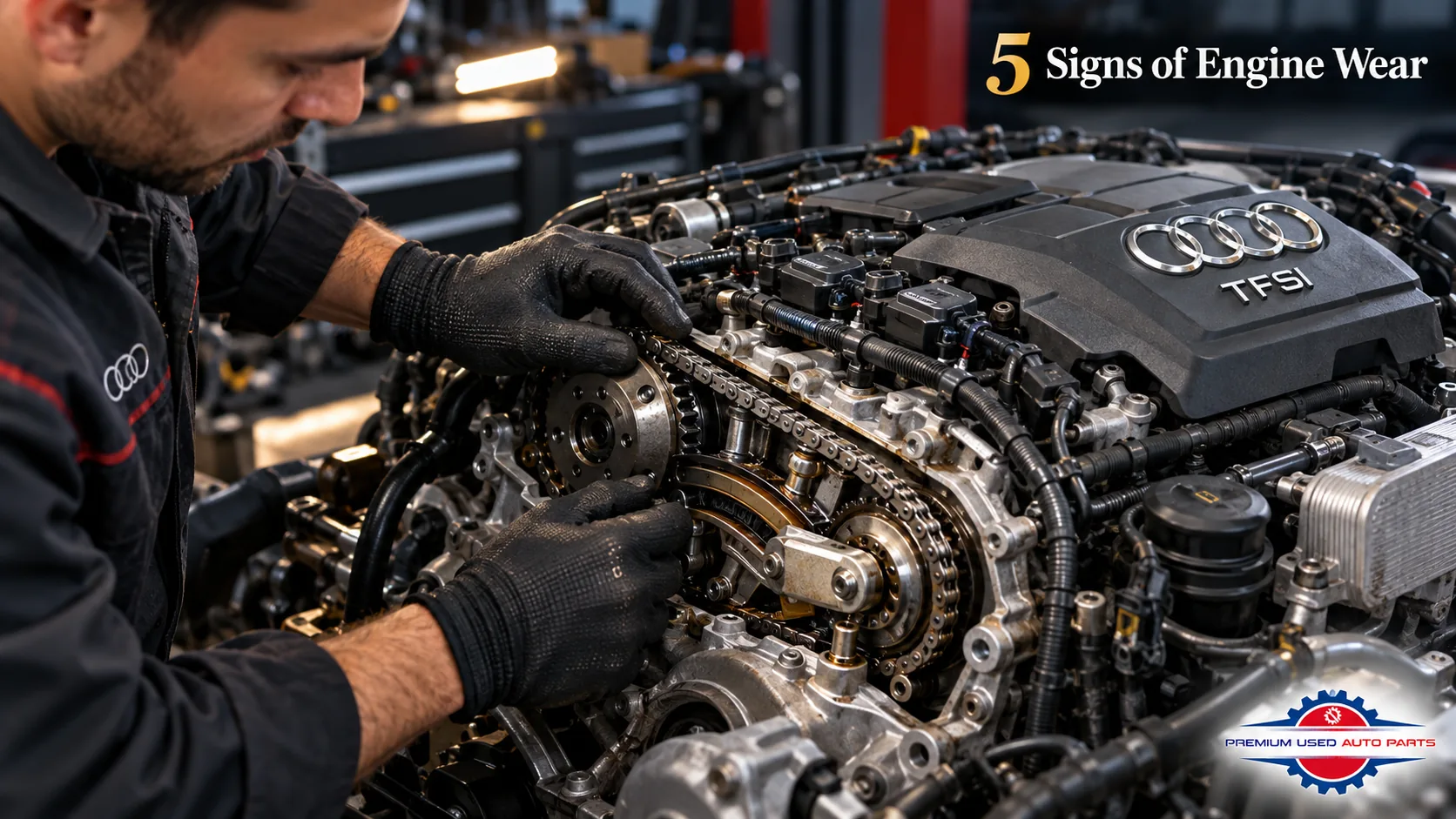
A worn-out Audi Q5 engine usually shows several symptoms at once. One on its own is often a fixable part. Several together on a high-mileage engine point to internal wear.
Mechanical signs
Listen for a deep knock that rises with RPM, which is often a bearing, and a rattle right after a cold start, the classic timing chain tensioner warning on older 2.0Ts. Uneven compression between cylinders is the measurable version of the same story.
Fluid signs
Pull the oil filler cap at idle. A strong puff of smoke means blow-by from worn rings. Also watch for coolant vanishing with no visible leak, blue-gray exhaust smoke, and oil use that keeps climbing.
Performance signs
Power that fades and stays gone after a tune-up, misfires that return after new plugs and coils, or a check engine light that keeps coming back.
How to Estimate the Remaining Engine Life of a High-Mileage Audi Q5
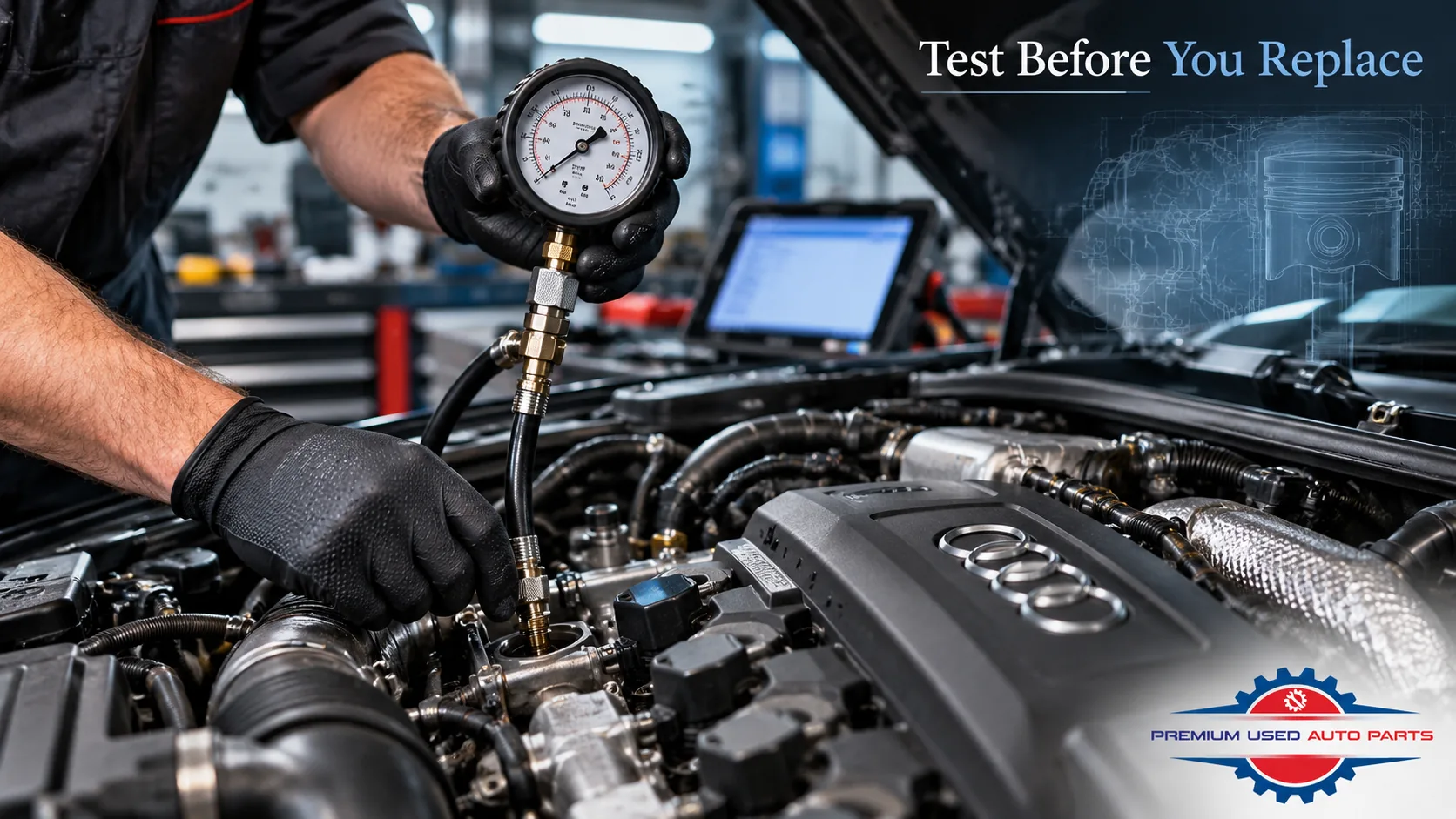
You can't get an exact number, but service records, a compression and leak-down test, and an oil analysis tell you far more than the odometer.
Reading the service history
Expect oil changes every 5,000-7,500 miles with no year-long gaps. After that, expect the large jobs. Starting from 2009-2017 2.0Ts expect ring or timing chain jobs, water pump or thermostat housing jobs, the coolant pump recall on 2013-2017 2.0Ts and carbon cleanings past 80,000 miles. Lack of records doesn't mean the job wasn't done. It just means you're left to wonder.
Compression and leak-down test results explained
How your reeds close together doesn't really matter that much as long as you are within about 10% of each other. With compression, leak-down is actually more informative. Under 10% leak-down is good. 10-20% is normal wear, and over 20% is bad. Air hissing out of the oil filler means rings. Air hissing out of the intake means a bad valve. Air hissing out of the exhaust means a bad valve.
Oil analysis and scan tool checks
An inexpensive oil analysis shows bearing metal, coolant or fuel in the oil. On 2.0T engines, a scan tool can also read camshaft timing deviation, which shows how stretched the chain is.
Questions to ask before buying a high-mileage Q5
Ask how often the oil was changed, whether there's been ring or chain work, how much oil it uses, whether it's ever overheated, and whether your mechanic can test it. A seller who refuses that last one has answered the rest.
Audi Q5 Reliability: Why Service History Matters More Than Mileage
Q5 engines are unforgiving. One that's been looked after holds up well. A neglected one fails in expensive, predictable ways.
A documented 140k engine vs. an undocumented 80k engine
Picture two 2015 Q5 2.0Ts. One has 140,000 miles and receipts for oil every 6,000 miles, a water pump at 70,000 and a chain inspection at 100,000. The other has 80,000 miles and one recent oil change receipt.
Most buyers pick the second. We'd look hard at the first, because its weak points are already handled. The second could be fine, or it could be burning a quart every 1,000 miles. You won't truly understand it until you possess it.
Is a High-Mileage Audi Q5 Engine Worth Keeping?
Usually yes, if it passes a compression and leak-down test and the rest of the Q5 is solid.
When it makes sense to keep driving it
Keep it if compression is even, leak-down is under about 20%, oil use is steady, there's no knock or cold-start rattle, and the transmission and electronics are healthy. Plenty of these engines have a lot left at 150,000 miles.
When the engine has reached the end of its useful life
We'd call it done with poor test results in more than one cylinder, bearing knock, a chain that has already jumped, a confirmed internal coolant leak, or oil burning so heavy you're adding a quart every few hundred miles. Then the real question is whether the rest of the Q5 deserves another engine. If the body is clean and it shifts well, it often does.
Your options when the engine is worn out
You can rebuild your existing engine, buy a remanufactured engine, or install a low-mileage used OEM engine from a donor Q5. A used engine must match your Audi Q5's engine code and vehicle configuration.
Premium Used Auto Parts stocks tested used Audi Q5 engines with recorded mileage and a warranty, matched to your VIN before you pay.
Frequently Asked Questions
Final Verdict
A well-maintained Audi Q5 engine has the potential to run between 150,000 and 200,000 miles; however, mileage is just part of the overall picture. First, identify the specific engine type you possess, as the 2009–2012 2.0T requires more attention compared to the 3.0T or the later 2.0T models from 2018 onward. Next, examine the service history, listen for any rattle on cold starts, and monitor the oil and coolant levels.
Conducting a compression and leak-down test will clarify the engine's condition further. If your engine is nearing the end of its lifespan, Premium Used Auto Parts can provide a VIN-matched used OEM engine to ensure your Q5 remains operational.
 Ford
 Chevrolet
 GMC
 Jeep
 Buick
 Cadillac
 Oldsmobile
 Tesla
 Pontiac
 Lincoln
 Dodge
 Chrysler
 Hummer
 Geo
 Mercury
 Plymouth
 RAM
 Saturn
 Audi
 BMW
 Mercedes-Benz
 Volkswagen
 Porsche
 Volvo
 SAAB
 Peugeot
 Toyota
 Honda
 Nissan
 Mitsubishi
 Mazda
 Hyundai
 Kia
 Isuzu
 Acura
 Lexus
 Subaru
 Scion
 Infiniti
 Genesis
 Land Rover
 Mini
 Bentley
 Aston Martin
 Jaguar
 Fiat
 Alfa Romeo
 Lamborghini
 Ferrari
 Maserati
 McLaren

The Premium Used Auto Parts Editorial Team is backed by years of experience in the automotive parts industry and creates practical, research-driven content for vehicle owners, repair shops, and DIY enthusiasts across the USA. Our team combines real-world parts expertise with industry research to help drivers make informed decisions about OEM replacement parts, vehicle repairs, and maintenance. Every article is developed with a commitment to accuracy, transparency, and delivering reliable information that supports smarter vehicle ownership.