Used Audi Q5 Engine: How to Match the Right One by VIN and Engine Code
Table of Contents
15 ChaptersIntroduction
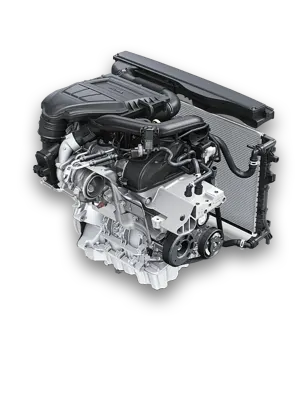
A used Audi Q5 engine is the most affordable way to get a Q5 with a failed motor back on the road, but only if it's the right engine. In the US, Audi fitted five different powertrains to the first-generation Q5 alone. Two engines that look the same in a listing can have different wiring, software, and emissions certification.
Here's how a swap goes wrong. The buyer orders by year and engine size, the engine arrives, and the shop finds the sensors or the engine computer don't match. Then you're paying for return shipment, restocking fees, and days of downtime.
This guide covers the checks that prevent that. You'll learn how to find your engine code, match it by VIN and part number, and check a used engine's condition. It also covers what to get in writing from the seller, and whether a 2015 engine will fit a 2011 Q5.
Audi Q5 VIN Engine Lookup Comes First
Your Vehicle Identification Number (VIN) is 17 characters long. You can find it at the base of the windshield on the driver's side, on the sticker in the driver's door jamb, and on your registration and insurance card.
An Audi Q5 VIN engine lookup does three jobs:
- It confirms the model year. The 10th character is the year code: B = 2011, C = 2012, D = 2013, E = 2014, F = 2015, G = 2016, H = 2017.
- It identifies the factory engine. A dealer parts counter or parts catalog can decode the VIN to the exact engine and transmission your Q5 was built with.
- It lets the seller verify fitment. A good seller checks your VIN against the donor engine before anything ships.
Model year alone isn't enough. A 2013 Q5 could have left the factory with a 2.0 turbo four-cylinder, a 3.0 supercharged V6, or the hybrid powertrain. Send the seller the full VIN, not just “2013 Q5 Premium.” If a seller sells you an engine without ever asking for your VIN, treat that as a warning sign.
Where to Find Your Audi Q5 Engine Code
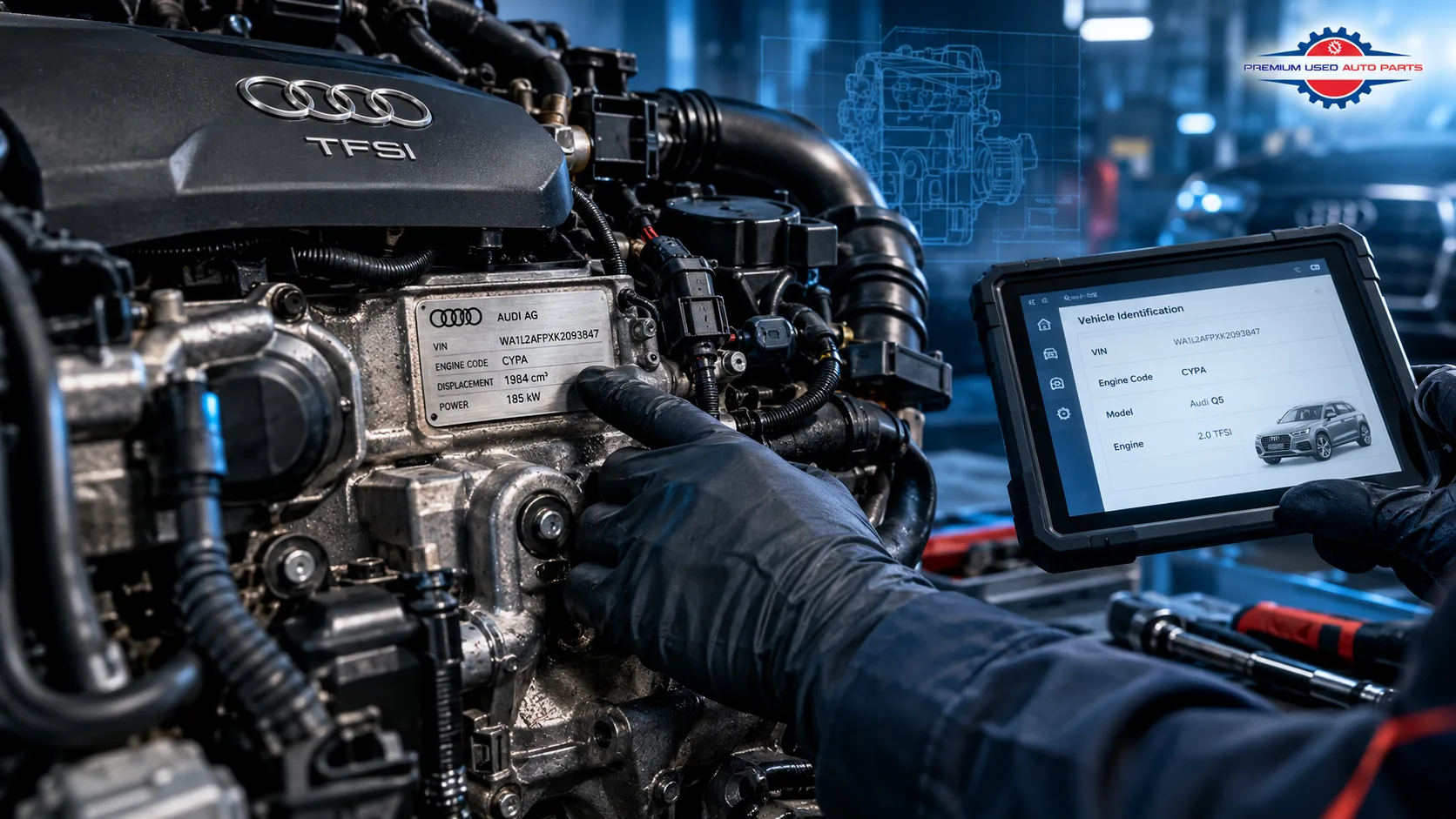
The Audi Q5 engine code is a short letter code that identifies the exact engine version. CAEB, for example, is the 2.0T used in the 2011 Q5. You can find yours in three places:
- The vehicle data sticker. Lift the trunk floor and look in the spare tire well. Audi lists the engine code, transmission code, paint code, and option codes there. A copy is often in the front of the maintenance booklet too.
- The engine block. The code is stamped on the block itself. Where it sits depends on the engine, so bring a flashlight and a rag to clean the area.
- A VIN decode. Any Audi dealer parts department can read the code from your VIN in a minute or two.
Write the code down exactly as it appears. When you compare listings, the code is the first thing to match. Mileage and price come after.
Audi Q5 Engine Specs by Generation
These are the main Audi Q5 engine specs for US-market models, grouped by generation. The model-year ranges are approximate, and some trims overlap, so always confirm your engine by VIN.
Two things stand out. Most Q5 engines share one of only two displacements, about 2.0 or 3.0 liters. And each displacement covers several very different engines. A supercharged 3.0 and a turbo-diesel 3.0 are both “3.0 liter” engines, but they share almost nothing. Several other Audi models use the same engine families as the Q5.
Audi Q5 Engine Compatibility Across Model Years
The simple rule: an engine with the same code as yours will bolt in and run with your existing engine computer (ECU), wiring harness, and emissions equipment. An engine with a different code may physically fit, but it often needs ECU coding, different sensors, harness changes, or emissions work before it runs properly.
Matching displacement alone doesn't make engines interchangeable. Even when two engines are the same size, these are the usual differences:
- Generation. First-gen (8R) and second-gen (FY) Q5s are different platforms. Mounts, wiring, and electronics don't carry across.
- Internal revisions. Audi revised the 2.0T during the first-gen run. Its own settlements treat the 2011 engine and the 2012–2014 engines as separate groups with separate piston and ring issues.
- Induction and fuel system. The 3.2 V6 is naturally aspirated. The 3.0 TFSI that replaced it is supercharged. Different intake, fuel, and cooling parts come with that.
- Hybrid hardware. The hybrid's 2.0T works with an electric motor between the engine and transmission, so its supporting hardware differs from the standard 2.0T.
- Emissions certification. In California and other states that follow CARB rules, a swapped engine generally has to be the same model year or newer and meet the vehicle's original emissions certification. Check your state's rules before you buy.
2011 Audi Q5 Engine Replacement With a 2015 Engine
In most cases, a 2015 engine is not a direct replacement for a 2011 Q5. Which 2011 engine you're replacing decides why.
If your 2011 Q5 has the 3.2 V6: no 2015 engine is a plug-in replacement. Audi dropped the 3.2 after 2012. The 2015 Q5's six-cylinder options were the supercharged 3.0 TFSI and the 3.0 TDI diesel, and both use different hardware and electronics. Your best option is a used 3.2 from a 2009–2012 Q5. You can check our used engines against your VIN.
If your 2011 Q5 has the 2.0T (CAEB): the 2015 2.0T is from the same engine family and has the same displacement. It has a different engine code and revised internals, though. The block may look the same, but ECU software, sensors, and connectors can differ. The safest 2011 Audi Q5 engine replacement is another CAEB engine. That could come from a 2011 Q5, or from another Audi with the same code. With a donor from another model, the oil pan, intake, and accessories may differ, so confirm with the seller what gets swapped over.
The same logic works the other way. If you own a 2015 and want its engine replaced, 2015 Audi Q5 engine compatibility comes down to matching your 2015 engine code, not finding “any 2.0T.”
One more point on CAEB engines. The 2011 Q5's 2.0T is covered by Audi's oil consumption settlement. Before you buy a CAEB engine, ask whether its pistons and rings were ever replaced under that program.
Matching by Engine Code and OEM Part Number
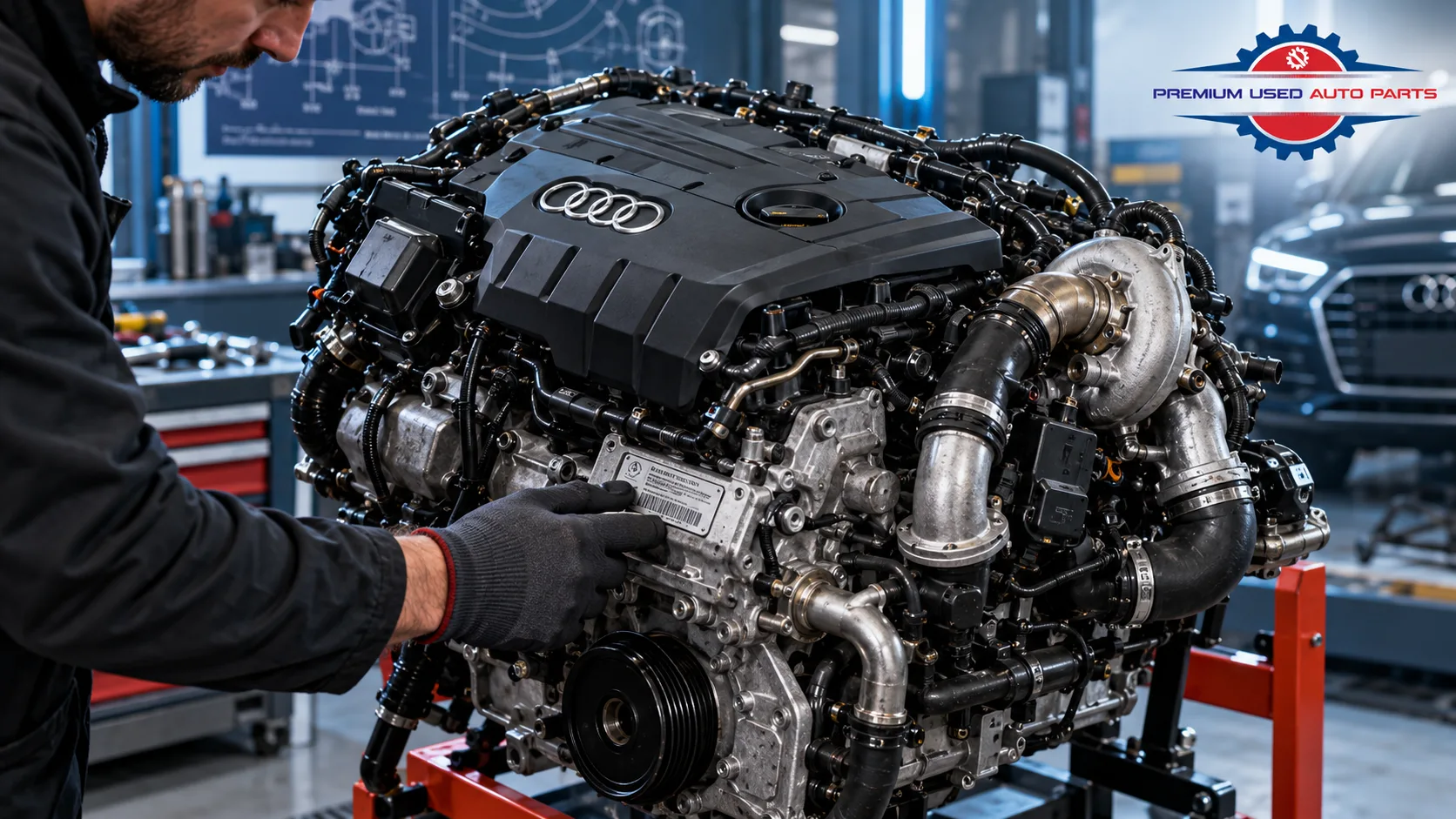
The engine code tells you the engine family and version. The OEM part number tells you the exact assembly. Audi part numbers are written in groups of letters and digits, and the letter at the end often marks a revision. Two engines with the same code can carry different revision letters, and that difference can decide whether your existing parts carry over.
When you compare listings, check these three things in order:
- Engine code: It must match yours, or the seller must confirm the interchange in writing.
- Part number and revision: Ask for a photo of the label or tag on the donor engine.
- What's included: Sellers use these terms differently, so get the exact list.
| What you're buying | Usually includes | Usually doesn't include |
|---|---|---|
| Complete engine | Block, heads, internals, intake and exhaust manifolds, and often some sensors and accessories | Transmission, ECU, sometimes the turbo or supercharger |
| Long block | Block, crank, pistons, heads, valvetrain, timing components | Intake, exhaust, accessories, sensors, oil pan on some engines |
| Short block | Block, crank, pistons, rods | Heads, valvetrain, timing parts, everything bolted on top |
If the listing doesn't say what's included, ask before you pay. With a long block, you have to transfer the intake, accessories, and sensors from your old engine or buy them separately.
Audi Q5 Timing Chain Tensioner and Oil Consumption Checks
Mileage is only the starting point. Ask for the actual odometer reading of the donor vehicle, a photo of the odometer, and the donor's VIN. On Q5 engines, two known problems deserve their own questions.
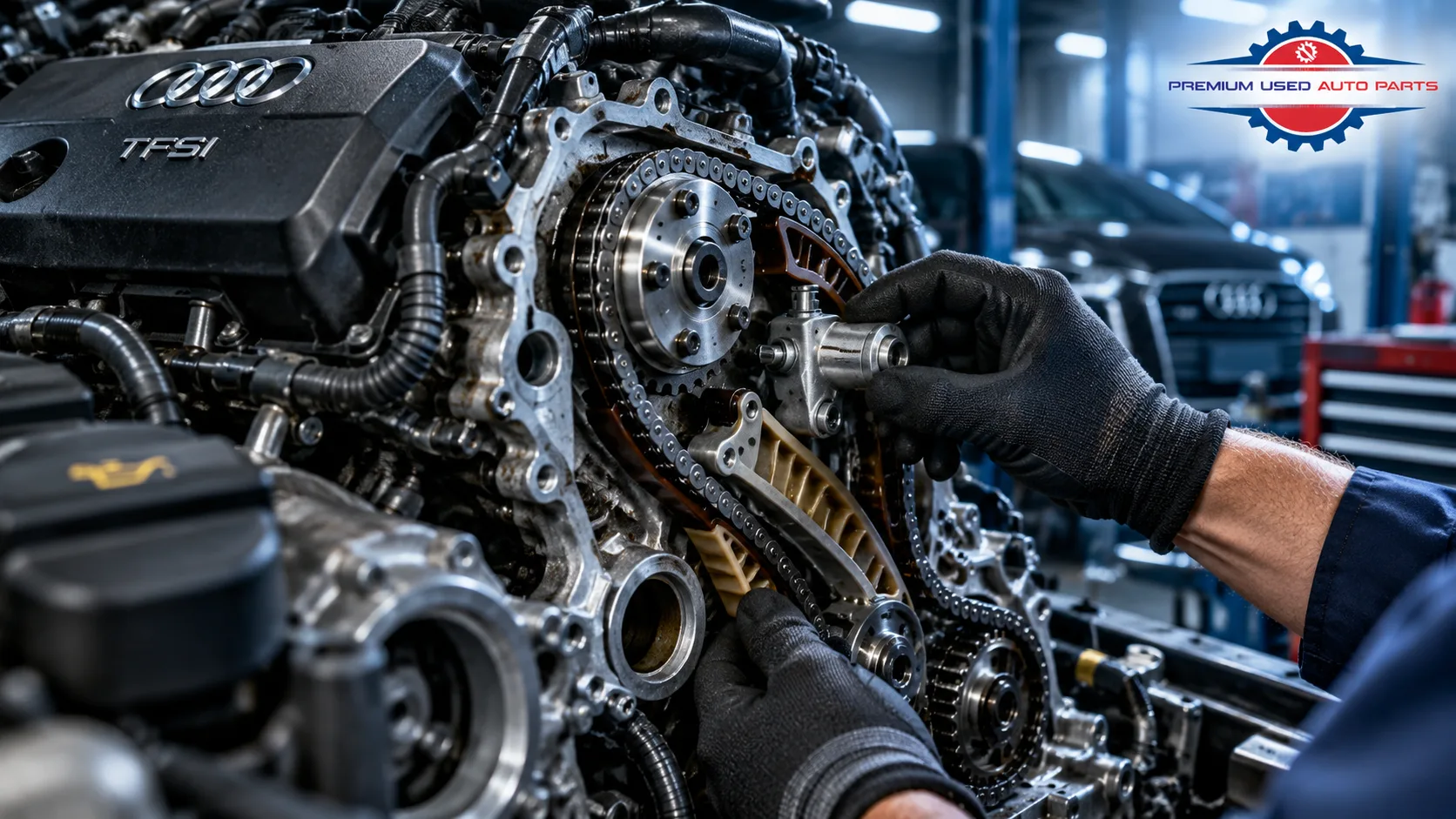
Audi Q5 timing chain tensioner. First-gen 2.0T engines, including 2009–2012 Q5s, use a timing chain tensioner that has been linked to premature failure. When it fails, the chain can skip a tooth. That can cause loss of power or catastrophic engine damage. Ask whether the tensioner was updated to the revised part, and ask for a cold-start video. A rattle in the first few seconds after a cold start is a red flag.
Audi Q5 oil consumption. Excessive oil use on the 2.0T led to two separate settlements:
- 2011 Q5 (CAEB engine): Audi extended warranty coverage for oil consumption repairs from 4 years/50,000 miles to 8 years/80,000 miles.
- 2012–2014 Q5: a later settlement covers 75% of qualifying repair costs for up to 9 years/90,000 miles, once a dealer oil consumption test confirms the problem.
For any used 2.0T from these years, ask whether the pistons and rings were replaced. A rebuilt engine with updated parts is a better buy than one with the original parts and an unknown history.
Check these on any donor engine, whatever its size:
- Compression test results for every cylinder, not just “passed”
- Signs of oil leaks, sludge under the oil filler cap, or coolant mixed with oil
- Spark plug condition, where available, since oil-fouled plugs point to burning oil
- Whether the engine was run and tested before removal, and how the seller tested it
Questions to Ask the Seller Before You Pay
The answers to these questions protect you if something goes wrong. Ask each one, and keep the answers in an email or written quote:
- Have you confirmed this engine fits my VIN, and does the engine code match?
- What is the donor vehicle's year, model, mileage, and VIN?
- Was the engine tested before removal? Can I see the compression numbers?
- Was it a complete engine or long block, and exactly what's attached?
- For 2.0T engines: has the timing chain tensioner been updated, and were pistons or rings replaced?
- How long does shipping take to my zip code, and is liftgate delivery included?
- What's the warranty, and what does it cover?
- If it doesn't fit or arrives damaged, who pays return shipping?
Warranty and Return Policy Checklist
Get each of these terms in writing before you order:
- Warranty length in days or miles, stated in writing
- Parts only, or parts and labor? Most used engine warranties are parts only.
- Installation deadline. Some warranties require the engine to be installed within a set number of days of delivery.
- Installation requirements, such as a licensed shop receipt, new fluids, filters, and gaskets
- What voids the warranty, such as overheating, running without oil or coolant, or modifications
- Return window and restocking fee as a percentage
- Who pays shipping on a return or warranty claim
- How to file a claim and how long the seller takes to respond
Here's how Premium Used Auto Parts' terms compare. Engines carry a 90-day, parts-only warranty from delivery that covers internal mechanical failure. It doesn't cover labor, installation, damage from improper installation or incorrect fluids, or damage to other components. A 25% restocking fee may apply if an order is cancelled or returned because the wrong part was ordered. That's one more reason to order by VIN. Review our warranty coverage, eligibility requirements, and claim conditions on our warranty page.
Audi Q5 Engine Replacement Cost: Used vs. New
The engine's price is only part of the Audi Q5 engine replacement cost. A fair comparison counts everything it takes to get the car running again. Ask any seller or shop for a written quote that lists each of these lines separately:
A used engine usually costs much less than a new long block from a dealer. Labor, parts, and fluids cost roughly the same either way, though. So the engine price gap matters most when you compare the two. Get both quotes on the same basis before you decide. Our shipping policy covers delivery times and liftgate options.
Common Mistakes When Ordering a Replacement Engine
Avoid these when you place the order:
- Ordering by year and size only. “2013 Q5 2.0” covers more than one engine version. Order by VIN and engine code.
- Assuming the same size means the same engine. A 3.0 TFSI and a 3.0 TDI are both 3.0 liters, and they're not interchangeable.
- Skipping the “what's included” question. A long block arrives without the parts a complete engine includes.
- Ignoring the installation deadline. Miss it and the warranty may be void before the engine ever runs.
- Not checking state emissions rules. In CARB states, the wrong model-year engine can fail inspection.
- Reusing worn parts. Old mounts, gaskets, and a tired thermostat can make a good engine look bad in its first month.
Request a Free Compatibility Check
If you're shopping for an Audi Q5 replacement engine, send us these four things:
- Your 17-character VIN
- Your engine code, if you have it
- Your current mileage
- Your zip code to confirm delivery time
We match the OEM interchange number against your 17-digit VIN and reply with the engines that fit. Every engine is compression tested across all cylinders before it's listed. The donor mileage is recorded and disclosed in writing before you buy. Engines ship as long blocks, and we confirm in writing which accessories come with each unit.
Every engine carries a 90-day, parts-only warranty from delivery that covers internal mechanical failure. Shipping is free to the continental US, and most orders leave within 3–7 business days after payment clears. You get tracking the day it ships.
Need help finding the right replacement part for your vehicle? Enter your VIN in our Find Your Part form to find a compatible match. Start your search here. Have questions? Call our team at 1-800-606-1107 for expert assistance.
Frequently Asked Questions
Conclusion
A used Audi Q5 engine can be a practical replacement when compatibility and condition are verified before purchase. Confirm the VIN, engine code, part number, donor mileage, and available test results with the seller. Before ordering, get the warranty coverage, installation deadline, return policy, included components, shipping charges, and estimated installation costs in writing, and check applicable state emissions requirements.
 Ford
 Chevrolet
 GMC
 Jeep
 Buick
 Cadillac
 Oldsmobile
 Tesla
 Pontiac
 Lincoln
 Dodge
 Chrysler
 Hummer
 Geo
 Mercury
 Plymouth
 RAM
 Saturn
 Audi
 BMW
 Mercedes-Benz
 Volkswagen
 Porsche
 Volvo
 SAAB
 Peugeot
 Toyota
 Honda
 Nissan
 Mitsubishi
 Mazda
 Hyundai
 Kia
 Isuzu
 Acura
 Lexus
 Subaru
 Scion
 Infiniti
 Genesis
 Land Rover
 Mini
 Bentley
 Aston Martin
 Jaguar
 Fiat
 Alfa Romeo
 Lamborghini
 Ferrari
 Maserati
 McLaren

The Premium Used Auto Parts Editorial Team is backed by years of experience in the automotive parts industry and creates practical, research-driven content for vehicle owners, repair shops, and DIY enthusiasts across the USA. Our team combines real-world parts expertise with industry research to help drivers make informed decisions about OEM replacement parts, vehicle repairs, and maintenance. Every article is developed with a commitment to accuracy, transparency, and delivering reliable information that supports smarter vehicle ownership.