Audi Q5 Excessive Oil Consumption (2026 Guide): Causes, Symptoms, and Repair Options
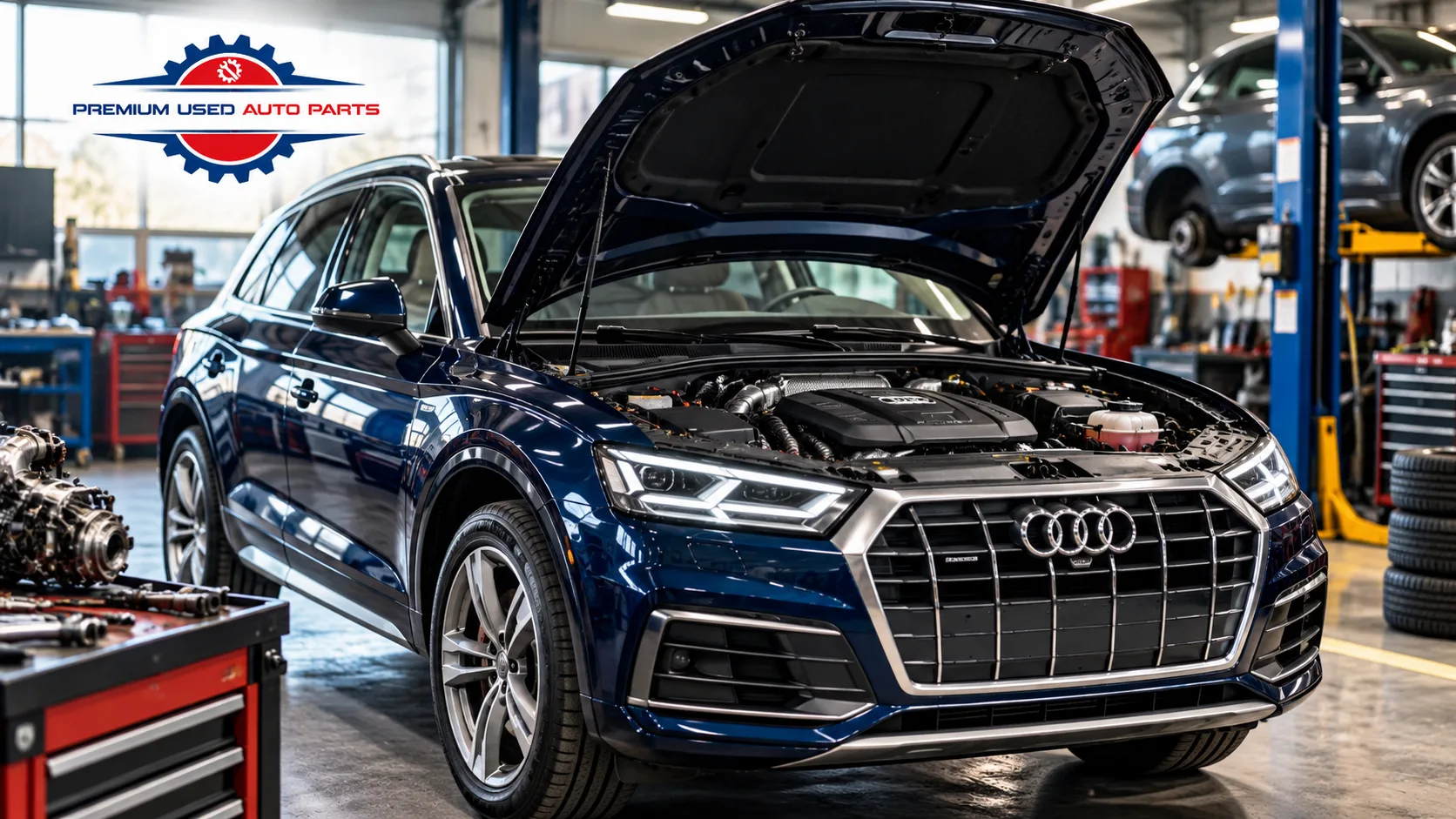
Table of Contents
14 ChaptersIntroduction
Low oil warning. Again? You topped up your Audi Q5 just three weeks ago, and now the warning is back. Sound familiar?
Audi Q5 excessive oil consumption can be frustrating, especially when you're constantly adding oil without knowing where it's going. Audi has cited oil consumption of up to 0.5 quart per 600 miles as potentially normal under certain conditions. If your Q5 is burning more oil than that, it's worth investigating rather than simply topping it off.
The cause could be a failing PCV valve, worn or stuck piston rings, hardened valve stem seals, a leaking turbocharger, or an external oil leak.
At Premium Used Auto Parts, we understand how stressful recurring engine problems can be. This guide covers the causes, the signs to watch for, and when repairing your engine or considering a replacement might make sense.
How Much Oil Consumption Is Normal for an Audi Q5?
Here is what the owner's manual says: the first 3,000 miles are a “break-in” period for a new engine, during which up to 0.5 quart of oil every 600 miles (or 0.5 liters every 1,000 km) is considered normal.
An average of a quart every 1,200 miles seems pretty good and is definitely a good starting point for watching oil consumption. Keep in mind, change, not number. A Q5 that never needed a top-up and suddenly needs a quart every 1,000 miles is trying to tell you something, even if the dealer says it is “within spec.”
Warning Signs Your Audi Q5 Is Burning or Leaking Oil
Catch the warning signs early, because a low oil light is often a late one, and by then you may have to get a tow.
Most people notice it when starting the car cold and oil starts burning, the exhaust smells really hot, or you get oil on the turbo. If your RPM is racing or you have a misfire code, it could mean you have fouled spark plugs.
Drips in the garage and empty oil bottles in the trunk are signs too. You might want to pay more attention if you see a few of the signs together.
How to Check Your Audi Q5's Oil Level Correctly
Check how you're checking before blaming the engine. If your Q5 has a dipstick, use it. If not, use the MMI screen to check the oil level.
Older models have a real dipstick (yellow handle). Many newer models, especially second generation models from 2018 on, do not have a dipstick you can use, and the level is shown on the MMI or the instrument cluster.
- Dipstick: Get the engine completely warm, park on a level surface, turn off the engine, and wait a few minutes. Pull, wipe, and push all the way in, pull again and read.
- MMI: Same process as above. Engine off, wait a couple of minutes, turn on the ignition and do not start the engine, then check the oil level. “No information available”? Nothing is broken. Drive a bit more and check again.
If the dash says you're low but the dipstick says full, there is a good chance the oil level sensor is bad. Then start a log. Each time you add oil, log the date and the mileage. After a couple of entries you'll know the oil consumption, which is the first thing a decent mechanic will ask.
Oil Leak or Oil Burning? Why Your Q5 Can Lose Oil Without a Visible Leak
There are only two exits. Oil either leaks out of the engine or gets burned inside it, and if your Q5 is losing oil with no drips anywhere, it's almost always burning it.
Burning oil is the confusing one. When a PCV valve fails or rings wear, oil gets drawn into the combustion chamber and heads out the tailpipe with everything else. The level keeps dropping while the driveway stays spotless, as if the oil evaporated (which, in a way, it did).
A small leak can also drip onto the hot exhaust and cook off before it hits the ground, so a clean driveway proves nothing.
Common Causes of Excessive Oil Consumption in an Audi Q5
The most common causes of Audi Q5 oil consumption are a failed PCV valve, worn piston rings, valve stem seals, turbo seals and external leaks. Start with the cheap suspects. Any good shop does.
PCV Valve and Crankcase Breather Failure
Some combustion pressure always gets past the rings, and the PCV (positive crankcase ventilation) valve's job is to route that pressure back into the intake. If the PCV valve sticks or its diaphragm splits, the intake starts pulling oil vapor with the air. Oil gets burned.
This is a known issue with the second-gen 2.0T found in Q5s between 2011 and 2017. It's one of the first things to check because it is the least expensive part on this list. Just know that not all PCV valves stick for the same reason. Owner forums are filled with people who replace the PCV and later find out the rings were the problem.
Worn or Sticking Piston Rings
The issue that everyone fears. The rings secure the pistons against the cylinder walls, but over time, carbon accumulates in the grooves of the rings, causing them to get stuck. Alternatively, the rings may just wear out, leading to oil seeping into the combustion chamber and igniting. This problem occurred frequently in some Audi 2.0T engines, prompting a service bulletin and several lawsuits.
Valve Stem Seals
Small rubber gaskets are located on each valve to prevent oil from seeping down the stem and into the cylinder. A hallmark sign of this issue is a puff of blue smoke immediately following a cold start, which disappears shortly after driving a bit.
Turbocharger Seal Wear
A turbo shaft rotates incredibly quickly, supported only by a slender layer of oil and sealed at both ends. When these seals degrade, oil can escape into either the intake or exhaust systems. If you notice dense blue smoke when accelerating or find oil pooling in the intercooler pipes, the turbo is likely the main culprit.
External Leaks: Cylinder Head Cover, Timing Cover, Oil Filter Housing, Rear Main Seal
Not on fire. Merely seeking an exit. In a Q5, the commonly affected areas for leaks include the gasket and screws of the cylinder head (valve) cover, the timing chain cover, the oil filter housing, and the rear main seal. The rear main seal is particularly troublesome, as accessing it requires removing the transmission.
Which Audi Q5 Engines and Model Years Have Reported Oil Consumption Issues?
Mostly it's the 2.0T four-cylinder. Here's what's on record:
| Model years | Engine | What's on record |
|---|---|---|
| Up to 2011 | 2.0T | Audi's October 2013 bulletin, “Engine oil consumption too high,” covered 2009 to 2011 2.0T models, Q5 included |
| 2012 to 2017 | 2.0T (second-gen EA888) | Class action over piston and ring defects; PCV valves fail a lot too |
| 2013 to 2017 | 3.0T V6 | — |
| 2022 to 2024 | 2.0 TFSI quattro | Recall of 89,417 Q5 and Q5 Sportbacks: head cover screws can loosen and leak |
None of that means your Q5 has a problem. Maintenance history counts for as much as the engine code.
How Mechanics Diagnose Excessive Oil Consumption
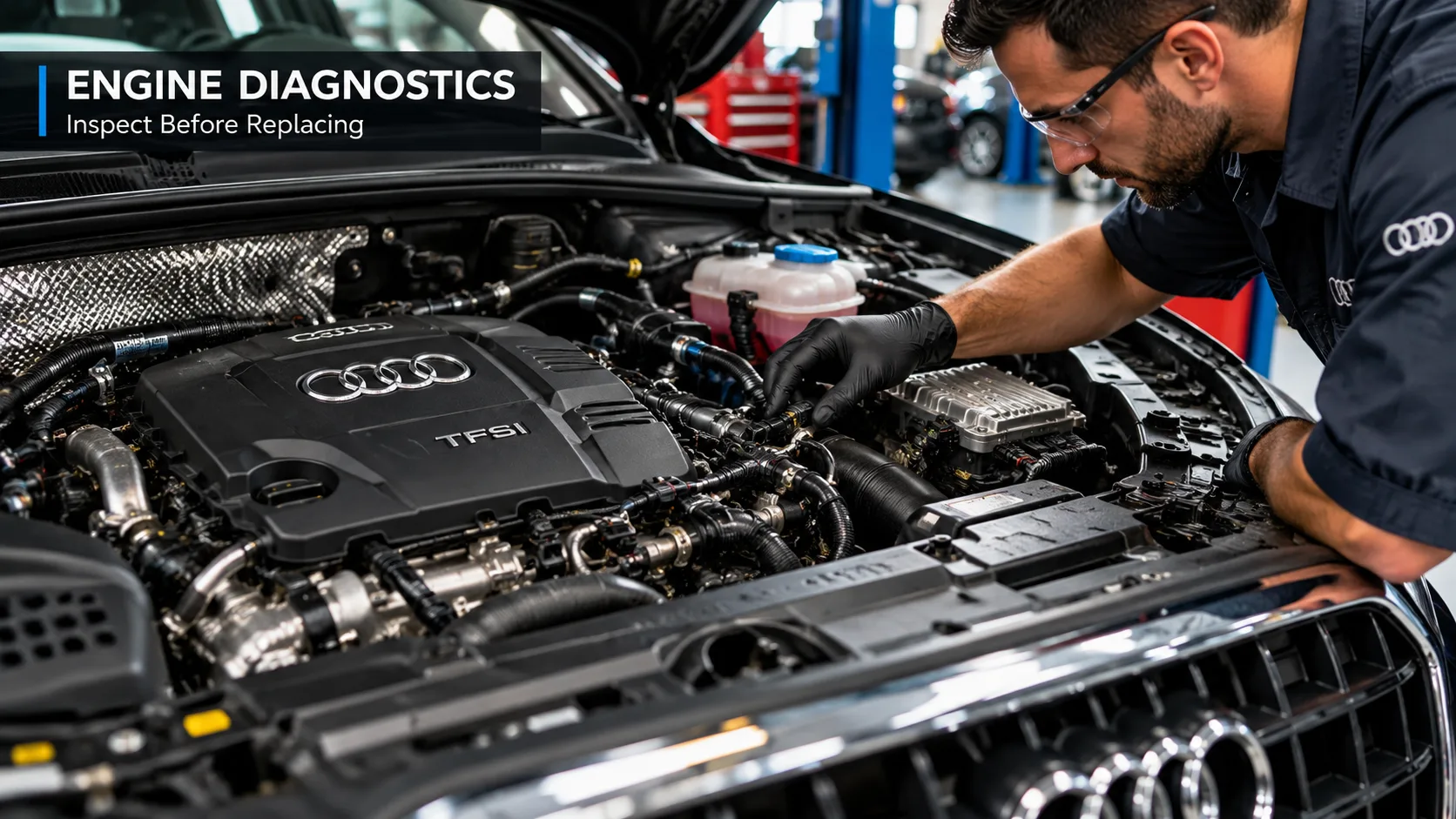
Exercise caution with any shop that mentions “pistons” before conducting thorough tests. Mechanics typically assess excessive oil consumption by performing a leak inspection, checking the PCV system, conducting an oil consumption test, and, if necessary, performing compression and borescope examinations.
The oil consumption test is carried out by filling the engine to a specific mark, driving a predetermined distance, and then measuring the oil level to see how much has been lost. Audi dealerships conduct an official version of this test prior to approving warranty services.
If the simpler solutions do not reveal the issue, more invasive procedures are required. Spark plugs are removed to identify which cylinders are consuming oil. Compression and leak-down tests determine the sealing effectiveness of each cylinder. Additionally, a borescope, a small camera inserted through the spark plug opening, can uncover scored cylinder walls or pistons affected by oil.
What Happens If You Keep Driving an Audi Q5 That Burns Oil?
Using oil won't damage the Engine, but running out of it will. If you consistently refill it, you can typically drive normally for several weeks while you diagnose the issue. The main concern is that the oil level might drop below the minimum without your awareness. The crankshaft and rod bearings will be the first to suffer, and a spun bearing can result in engine failure. The turbo and timing chain tensioner are also at risk.
Additionally, burnt oil can dirty the spark plugs and gradually build up inside the catalytic converter. Furthermore, oil dripping onto a hot exhaust poses a fire hazard, which is precisely why the issue with the cylinder head cover from 2022 to 2024 was addressed as a safety recall.
Audi Q5 Oil Consumption Repair Options, From Simple to Major
What gets fixed depends entirely on what the diagnosis found. Here's the ladder, smallest job first.
Audi Q5 Oil Consumption Warranty Coverage, TSBs, and Recalls
Before you spend any money, determine if Audi should cover the costs.
Start by checking for recalls. Enter your 17-digit VIN in the NHTSA recall search. If you own a 2022 to 2024 Q5 or Q5 Sportback quattro, look for recall number 25V-294 (referred to as 15ZK by Audi), which involves free inspection and replacement of the cylinder head cover screws by the dealer.
If you're still within Audi's new vehicle warranty or have a certified pre-owned vehicle, the dealer should perform an evaluation, including an oil consumption test to see if it meets Audi's threshold of 0.5 quarts per 600 miles. Inquire about any technical service bulletins (TSBs) during your visit; these are not recalls but rather Audi's guidance on addressing known issues.
Regarding legal matters, a class action was filed in 2021 concerning piston and ring problems for 2.0T models from 2012 to 2017. As of August 2026, one lemon law firm indicated there was no open claims process for affected owners. If your warranty has expired, it's still worth asking about goodwill assistance.
Repair or Replace? Signs Oil Consumption Means Serious Engine Wear
Many of these narratives conclude with a straightforward fix, particularly if a new PCV valve resolves the issue or a visible oil leak is identified while the compression remains intact. However, the discussion shifts significantly when diagnostics reveal:
- low or inconsistent compression
- elevated leak-down rates
- scoring on cylinder walls
- metallic debris in the oil or filter
- bearing knock or insufficient oil pressure
- issues re-emerging after a ring job
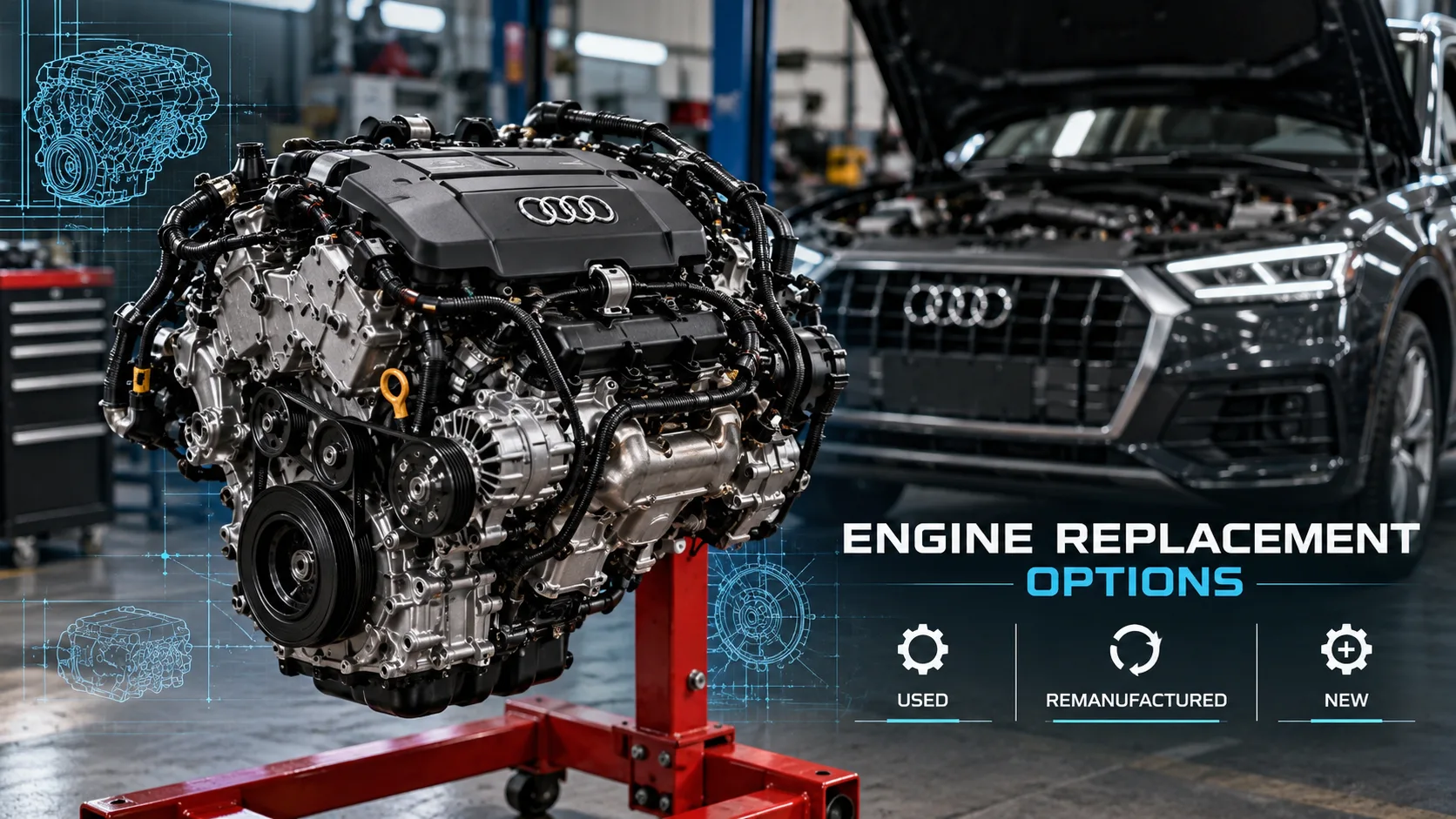
A ring job requires disassembling the entire engine. When the engine is opened up, mechanics frequently discover additional problems, such as worn bearings or a stretched timing chain. At this point, many vehicle owners begin to consider the cost of a new engine.
Frequently Asked Questions
Final Advice
Maintain a record. Check your VIN. Eliminate the possibility of the PCV valve and any noticeable leaks before diving into discussions about pistons, as many oil consumption issues are resolved at that point.
If that's not the case and your Q5 truly requires a new engine, Premium Used Auto Parts can assist you in locating an authentic OEM engine that's compatible. Just provide us with your VIN, and we'll provide you with clear options.
 Ford
 Chevrolet
 GMC
 Jeep
 Buick
 Cadillac
 Oldsmobile
 Tesla
 Pontiac
 Lincoln
 Dodge
 Chrysler
 Hummer
 Geo
 Mercury
 Plymouth
 RAM
 Saturn
 Audi
 BMW
 Mercedes-Benz
 Volkswagen
 Porsche
 Volvo
 SAAB
 Peugeot
 Toyota
 Honda
 Nissan
 Mitsubishi
 Mazda
 Hyundai
 Kia
 Isuzu
 Acura
 Lexus
 Subaru
 Scion
 Infiniti
 Genesis
 Land Rover
 Mini
 Bentley
 Aston Martin
 Jaguar
 Fiat
 Alfa Romeo
 Lamborghini
 Ferrari
 Maserati
 McLaren

The Premium Used Auto Parts Editorial Team is backed by years of experience in the automotive parts industry and creates practical, research-driven content for vehicle owners, repair shops, and DIY enthusiasts across the USA. Our team combines real-world parts expertise with industry research to help drivers make informed decisions about OEM replacement parts, vehicle repairs, and maintenance. Every article is developed with a commitment to accuracy, transparency, and delivering reliable information that supports smarter vehicle ownership.