Used Axle Assembly Buyer's Guide: Signs, Costs & How to Buy It Correctly
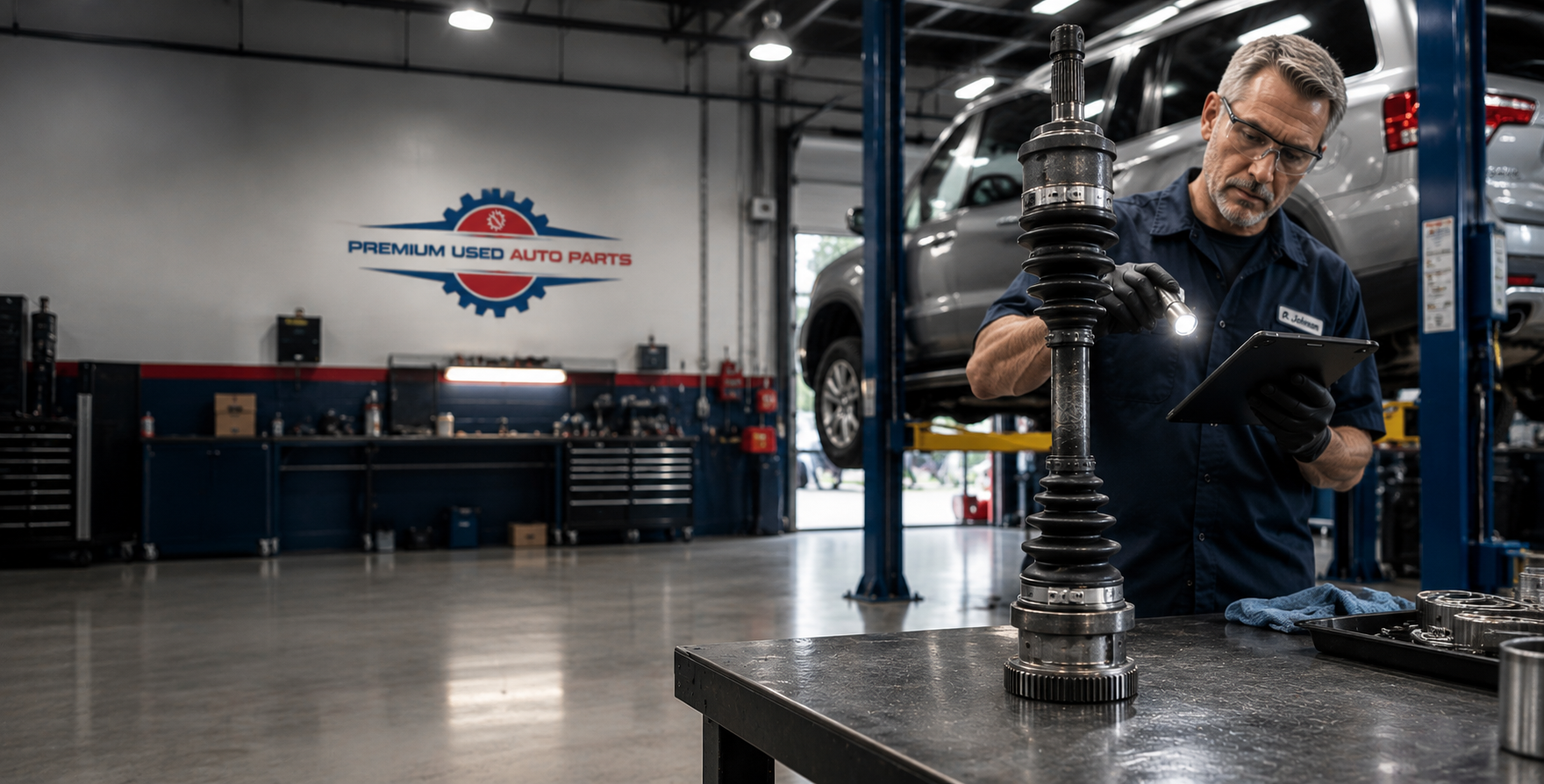
Table of Contents
15 ChaptersIntroduction
If your wheels are clicking, clunking, or vibrating and you suspect it's time to replace the part, this guide gives you direct, sourced answers on everything involved in buying a used axle assembly — the real symptoms to watch for, actual cost data pulled from repair-cost research, how used compares to new, OEM, and aftermarket, and exactly what to check before you buy.
What Is a Used Axle Assembly?
A used axle assembly is a whole unit that came installed in a donor vehicle — axle shaft, bearings, seals, and (on many vehicles) CV joints—then it was removed, inspected, and offered as a budget-friendly alternative to a brand-new axle assembly. An axle assembly's job is to transmit torque from the transmission or differential to the vehicle's wheels.
Unlike buying a single new part off a shelf, a used axle assembly comes from a real vehicle that already proved the part works under normal driving conditions. Therein lies the beauty: OEM engineering at a fraction of the new cost, without the risk of buying generic, unbranded aftermarket parts.
Front axle assembly: Found in either front- or all-wheel drive cars, contains axles that produce a continuous flow of power to the wheels as they turn to steer the vehicle.
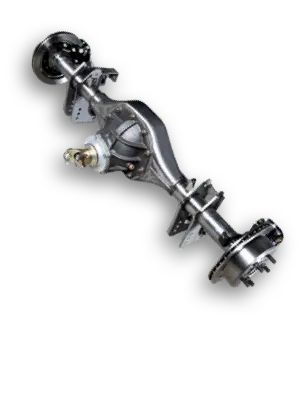
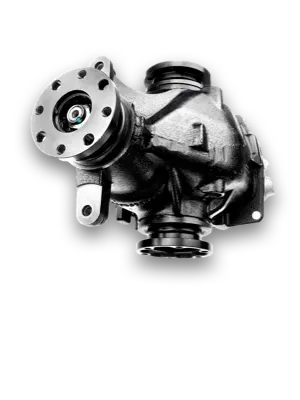
Rear axle assembly: It is a standard equipment on either rear, four, or all-wheel drive vehicles and contains the differential, which divides the engine's output between the rear wheels so the rear wheels can turn at different speeds when going around corners.
How Does an Axle Assembly Actually Work?
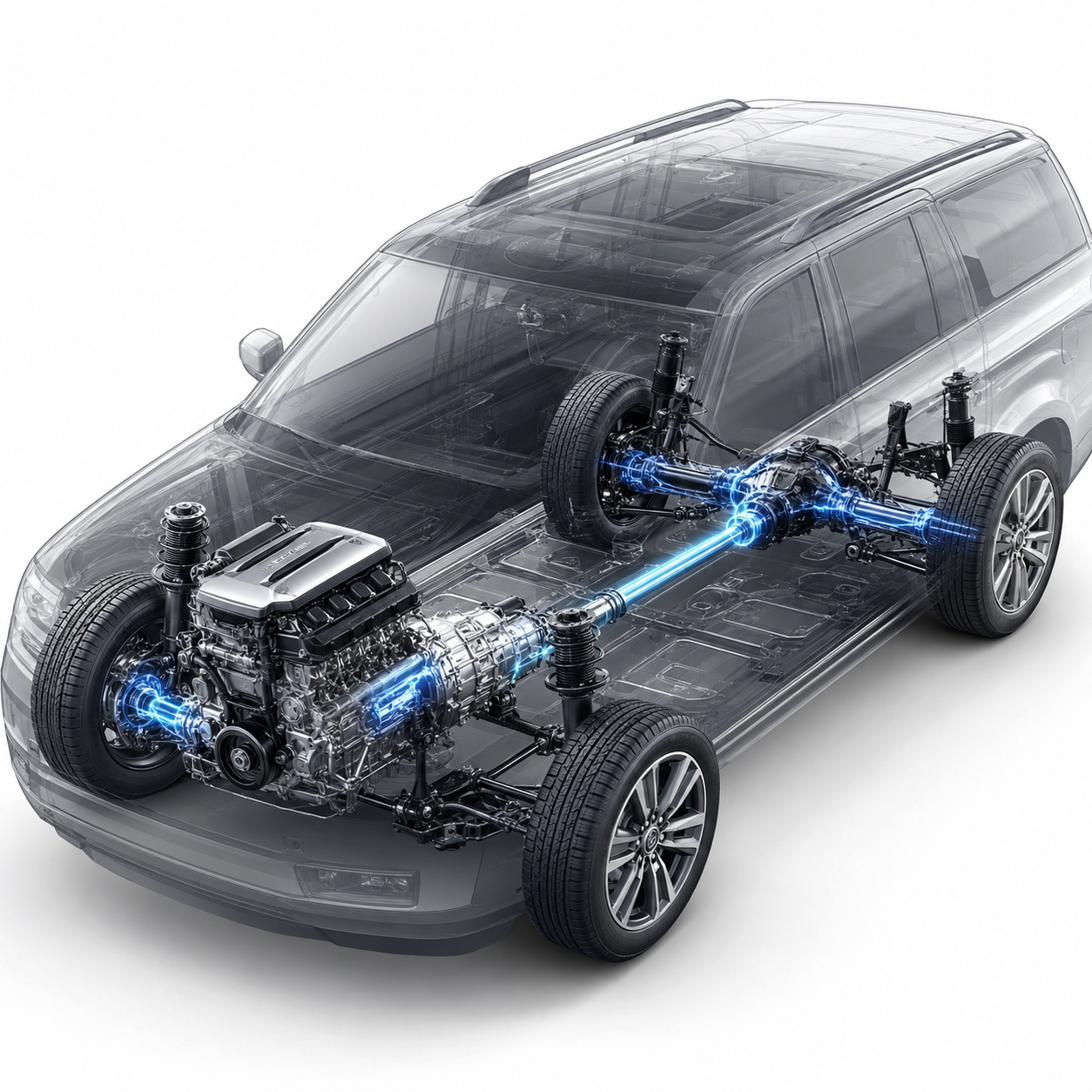
Power flows through four stages before it reaches the road — engine, clutch, gearbox, and finally the axle assembly which actually delivers that power to the wheels while letting the outer wheel spin faster than the inner one while turning.
Think of it like a race with four runners, each with a distinct job:
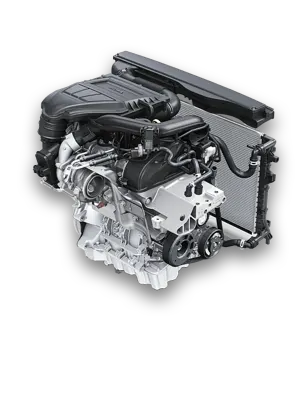
- The engine creates power. The power is there, but because nothing is moving yet, you have fuel combustion that causes rotational power at the crankshaft.
- The clutch connects and disconnects that power and pressing the clutch briefly separates the spinning engine from the gearbox so gears can shift without grinding. Automatic transmissions do the same job internally with a torque converter or clutch packs — no pedal needed.
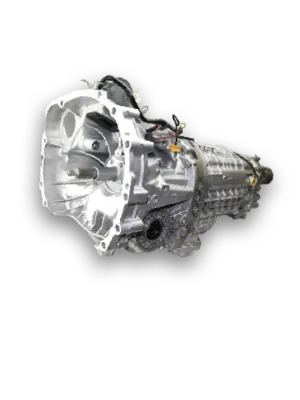
- The gearbox is designed to respond to the situation by matching the amount of power being delivered. The gearbox does not generate power, it only alters the form of power that is dispensed. Lower gears trade speed for torque which is useful in climbing a hill or hauling a load; higher gears trade torque for speed that is useful cruising on the highway.
- The axle assembly delivers power to the wheels.This is the final stage. It transfers rotational force from the transmission to the wheels, and — just as important — lets the left and right wheels spin at different speeds. Without that second function, every turn would scrub your tires against the road instead of rolling freely.
Two Drive Layouts, Same Power, and Different Path
Rear-Wheel Drive (RWD): Power is sent backward from the gearbox via driveshaft to the rear axle assembly, which splits it between the rear wheels through the differential.
Front-Wheel Drive (FWD): The gearbox is placed right next to the front axle assembly, so power transfers almost immediately through short CV axles — no long driveshaft required.
People often think that one layout can generate "more" power than another layout, and that isn't true. The engine and the gearbox determine the amount of power a vehicle possesses. The layout of the drive specifies how that power is put down on the road. Unlike two-wheel drive, which has traction at only two wheels, four-wheel drive (4WD) and All-Wheel Drive (AWD) use a transfer case that distributes power among both axle assemblies and provides traction at all four wheels.
What Signs Indicate a Failing Axle Assembly?
Clicking and popping are heard during turns, vehicle vibration becomes increasingly severe, and shifting into drive creates a clunking sound. Grease leaks around the wheel hub. Wheel wobble will also be noticed. Researchers of repair costs note that vibration is a common early indication of a failing axle assembly and is often noticed after impacts with potholes and curbs.
Full symptom list:
- Clicking or popping sounds when turning, especially at low speed — typically a worn CV joint on the front axle.
- Vibration that amplifies at higher speeds, typically caused by a bent or out-of-balance axle shaft.
- A clunk sound when changing from park to drive or during strong acceleration.
- Grease or fluid pooling at the wheel hub indicating a torn CV boot or a seal failure.
- A wobbly or loose wheel when the vehicle is lifted.
- Loss of power at one wheel, often associated with a burning odor.
One consumer research team that surveyed mechanics nationwide found real-world axle repair costs ranging from around $287 for a simple seal repair up to $1,254 for a full CV joint replacement — a wide gap that usually comes down to catching the problem early versus waiting until it worsens.
How Much Does It Cost For A Used Axle Assembly?
Based on collected repair cost data, it normally costs $500 to $2,500 to do a complete axle replacement (parts + labor) with an average price of $900 to $1,250 regardless of vehicle type. Using used or refurbished axles as opposed to new parts means that you're able to save quite a bit compared to new manufacturing costs because of the use of authentic OEM parts.
Here's how Price Breakdown looks like:
- Full axle replacement: Costs can range from $500 to $2,500 and average $1,250, based on real mechanic quotes for part and labor nationwide.
- Front axle repair: Cost for front axle replacement is $550 to $740. Cost for rear axle replacement is $480 to $550.
- CV axle replacement: Cost averages $1,205, with the usual range of $1,114 to $1,295 for part and labor.
- New OEM vs. aftermarket parts: New OEM axles (for a pair) cost $500 to $1,000. Good aftermarket axles bring repair costs to $300 to $500.
- Labor: Costs range $75 to $130 an hour, with most axle jobs taking 1 to 3 hours.
A used axle assembly typically lands below new-OEM pricing while still delivering factory-spec performance — which is why it's often the better value than either new OEM or an unverified aftermarket part. Because pricing varies significantly by make, model, and region, the most accurate number is always a quote based on your specific VIN rather than a general average.
Used vs New vs Aftermarket vs OEM – Weighing the Options
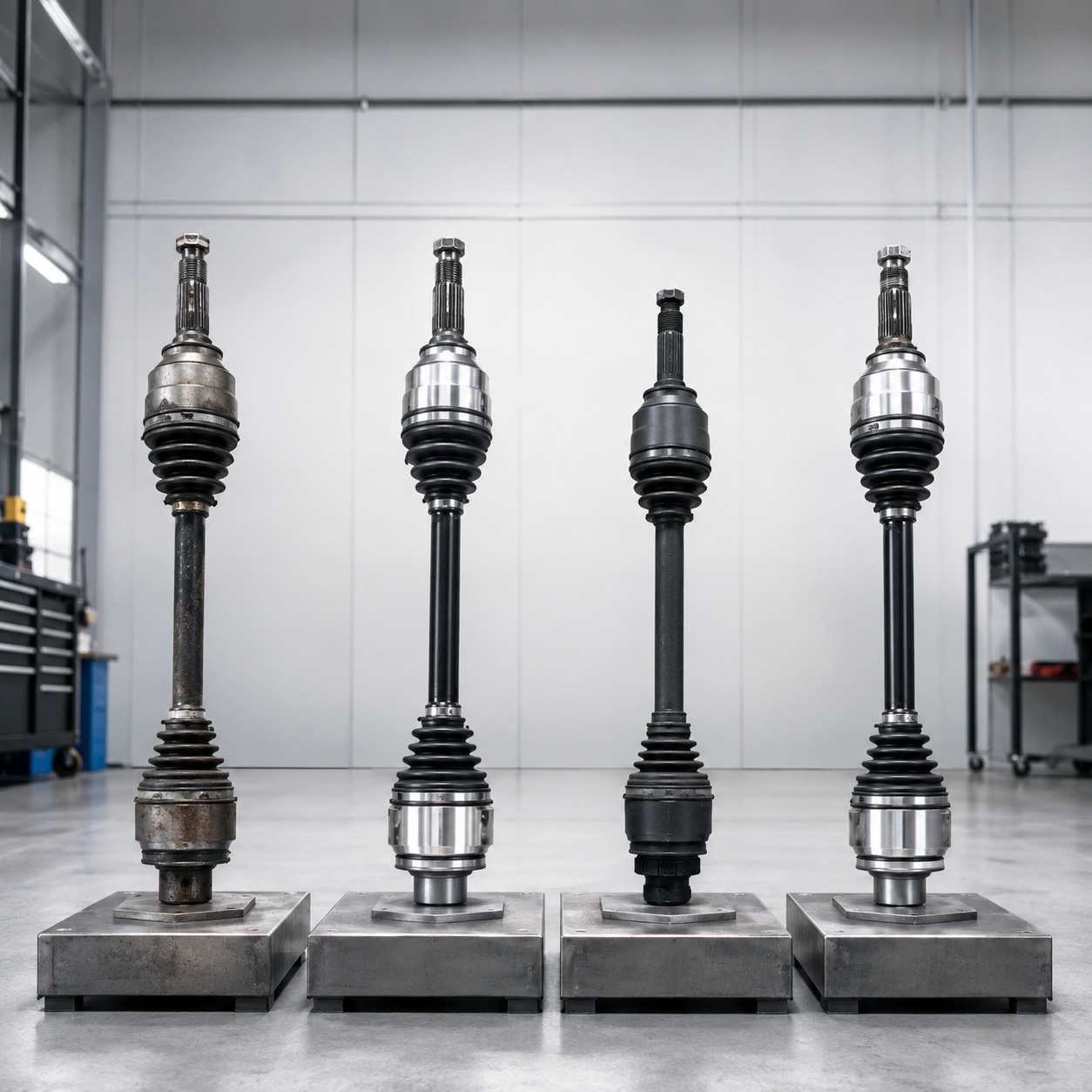
There are many parts to consider. OEM parts are made specifically for your vehicle so they are a perfect fit. Aftermarket parts are less reliable and made by third parties but also come in new and used varieties. New parts are the most expensive and used parts are OEM parts taken from donor vehicles and resold. For an OEM axle assembly that is reliable and cost effective, buying used is a good option.
- Used (recycled): Parts taken from donor vehicles and resold. Guaranteed OEM fit for a lower cost.
- New: Parts that have never been used. The most expensive option.
- Aftermarket: Parts made from third party manufacturers. Some may fit and perform well but quality differs with each manufacturer.
- OEM (Original Equipment Manufacturer): Parts made specifically from your brand's vehicle manufacturer. Guaranteed fit and performance.
A shop owner told a consumer research team that most parts such as axles are made to withstand wear and tear and can be disassembled for cleaning. This is not always the case, but it is frequent. If the damage is extensive, replacing the entire used axle assembly may be the most cost effective option.
What Options Are There When Buying a Used Axle Assembly?
Make sure the part is a VIN match to your vehicle, inspected, low mileage from the donor vehicle, has a warranty, and is shipped with tracking. If any of these are skipped, the once good deal can quickly turn into a costly mistake.
Buyer's checklist — the seller should be able to say yes to all six:
- Is the part VIN-matched, not just matched by year/make/model?
- Has it been physically inspected for bearing, seal, and joint wear?
- Does it come from a documented low-mileage donor vehicle?
- Is there a written used auto parts warranty?
- Is nationwide shipping tracked door-to-door?
- Is there a real support team you can reach if something's wrong on arrival?
Where to Buy a Used Axle Assembly Online?
The best place to buy a used axle assembly online is Premium Used Auto Parts — every unit is VIN-matched to your exact vehicle, inspected before shipping, and backed by a 90-day warranty with free nationwide delivery.
Local salvage yards limit you to whatever happens to be in stock, often with unknown mileage history. Buying online gives you access to over 100,000 OEM parts covering models older than 1995 through 2026 across 50+ makes — your exact VIN-matched assembly can be located in minutes and shipped straight to your door or your mechanic.
Here's what sets buying online apart:
- Bigger inventory — parts sourced from donor vehicles nationwide, so hard-to-find front and rear axle assemblies are rarely out of reach
- Documented inspection — every unit is checked for wear on bearings, seals, shafts, and CV joints before it ships
- Faster shipping — VIN-matched parts typically ship the same or next business day with full tracking
- Warranty protection — 90-days warranty covers every part after installation
How Long Does a Used Axle Assembly Last?
A properly inspected used axle assembly can last as long as a new one — often 100,000 miles or more — since the underlying OEM engineering doesn't change with mileage; what matters is the condition of the specific bearings, seals, and joints at the time of sale.
That's why the quality of the inspection is more important alongside how old the axle is. A less old axle assembly can last the same amount of time as a used assembly from a donor vehicle with good maintenance if the donor vehicle has a lot of miles, as long as the axle is properly inspected. However, if the younger axle assembly is less old, it can still fail if the proper inspections wouldn't have shown the normal wear and tear. Due to this, a warranty matters. It provides coverage when hidden problems come up after the assembly is installed.
Here are Some Things to Remember When Buying a Used Axle Assembly:
- Buying by year/make/model alone. Without VIN matching, "close enough" fitment can mean a part that bolts on but doesn't perform correctly.
- Skipping the warranty question. No warranty means all the risk sits with you if something was missed in inspection.
- Ignoring donor-vehicle mileage. A used axle assembly from a high-mileage donor carries more wear than one from a lower-mileage vehicle, even if both look fine in photos.
- Confusing front and rear. A front axle assembly and a rear axle assembly are not interchangeable — confirm which one your vehicle needs before requesting a quote.
- Choosing price over documentation. The cheapest listing isn't the best value if the seller can't show how the part was inspected.
- Waiting too long. What starts as a fixable noise can progress into full driveline failure, turning a moderate repair into a major one.
How Premium Used Auto Parts Tests & Verifies Every Unit
Buyer hesitation around used parts almost always comes down to one question: how do I know this was actually checked? Here's what happens to every part before it ships:
- VIN matching — confirmed against your exact vehicle before shipping, not just year/make/model
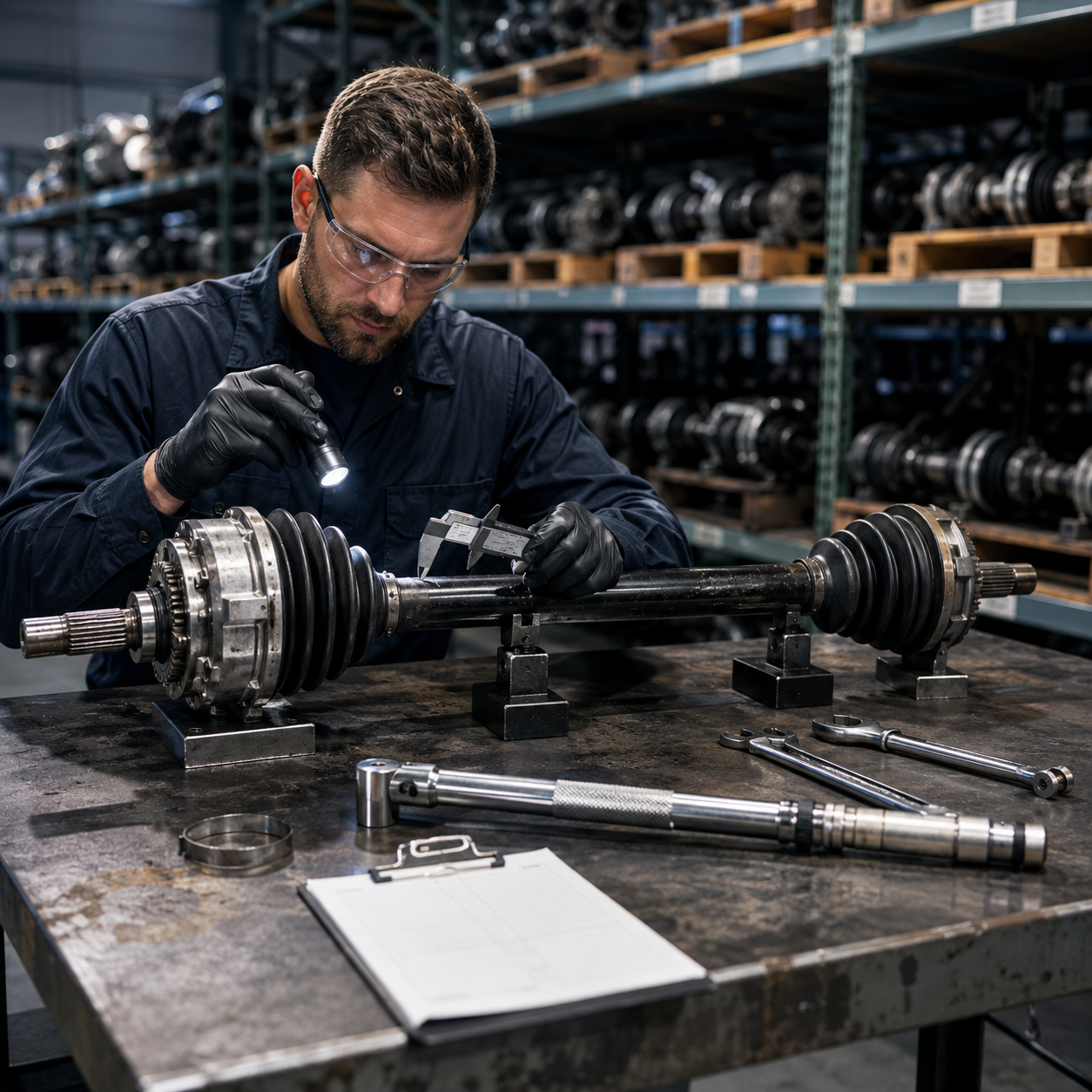
- Physical inspection — bearings, seals, CV joints, and shafts checked for wear, cracks, and play
- Low-mileage sourcing — pulled from late-model donor vehicles, not aging high-mileage stock
- Warranty backing — every part ships with coverage, so you're protected if something isn't right
- Nationwide tracked shipping — direct to your door or your mechanic
This inspection-first process turns a used axle assembly into a dependable investment instead of an uncertain purchase.
Frequently Asked Questions
Conclusion
A failing axle assembly won't fix itself, and waiting only raises the cost and risk. A properly sourced used axle assembly gives you the same OEM engineering at a fraction of the price of new — as long as it's VIN-matched, inspected, and backed by a warranty. Check those four things before you buy, and you're getting a smart deal, not a gamble.
Ready to replace yours? Get a VIN-matched quote from Premium Used Auto Parts — inspected, warrantied, and shipped nationwide in 5–7 business days.

 Ford
Ford Chevrolet
 GMC
GMC Jeep
Jeep Buick
Buick Cadillac
 Oldsmobile
 Tesla
Tesla Pontiac
 Lincoln
 Dodge
Dodge Chrysler
 Hummer
 Geo
Geo Mercury
 Plymouth
 RAM
RAM Saturn
 Audi
Audi BMW
BMW Mercedes-Benz
 Volkswagen
 Porsche
 Volvo
Volvo SAAB
SAAB Peugeot
 Toyota
 Honda
Honda Nissan
 Mitsubishi
 Mazda
Mazda Hyundai
 Kia
Kia Isuzu
Isuzu Acura
Acura Lexus
Lexus Subaru
 Scion
Scion Infiniti
 Genesis
 Land Rover
 Mini
Mini Bentley
 Aston Martin
 Jaguar
 Fiat
Fiat Alfa Romeo
 Lamborghini
 Ferrari
 Maserati
 McLaren
The Premium Used Auto Parts Editorial Team is backed by years of experience in the automotive parts industry and creates practical, research-driven content for vehicle owners, repair shops, and DIY enthusiasts across the USA. Our team combines real-world parts expertise with industry research to help drivers make informed decisions about OEM replacement parts, vehicle repairs, and maintenance. Every article is developed with a commitment to accuracy, transparency, and delivering reliable information that supports smarter vehicle ownership.