13 Toyota Prius Problems to Know Before You Buy a Used One
Table of Contents
7 ChaptersIntroduction
The Prius has earned its reputation. Plenty of them pass 200,000 miles, taxi fleets have run them into the ground for years, and they still get fuel economy that most cars can't touch.
That doesn't mean every used Prius is a safe buy. A Prius that's been looked after can outlast almost anything else on the lot, while a neglected one can cost you a lot of money.
So, what goes wrong with these cars? The most common Toyota Prius problems are hybrid battery wear, inverter and coolant pump failures, brake actuator trouble, EGR clogging (on 2010-2015 models), oil burning, and dead 12V batteries.
Which of these you should worry about depends heavily on the generation you're looking at. If you're looking for used Toyota parts, it's also worth understanding which components are most likely to need attention. Let's go through it.
Which Generation Are You Looking At?
This matters more than the mileage. Each generation has its own weak spots, so start by knowing which one is in front of you.
A quick note about Gen 1 models: they are over 20 years old. While they might still be operable, they are considered by many to be past their prime. The parts for these models are becoming harder to source, and the original batteries in these models have far surpassed their usefulness. If you are not an enthusiast or if the price is not significantly reduced, you should look to buy a more recent model. On to the issues:
13 Toyota Prius Problems Worth Knowing About
1. Hybrid Battery Wear
Most affected: All generations, especially older Gen 2 and Gen 3 cars
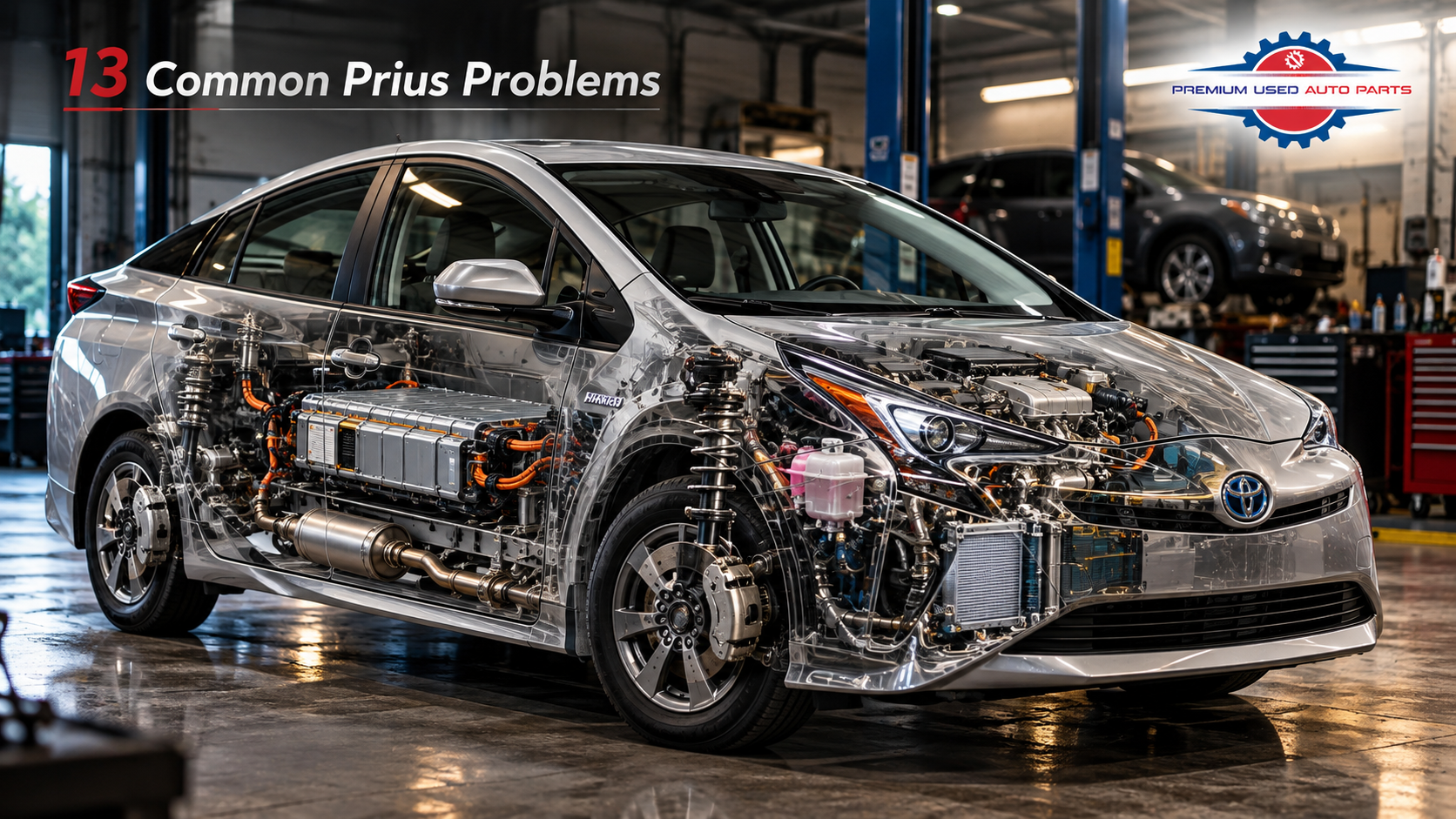
This component gets the most concern because it is the most expensive in the hybrid system. The good thing about this component is that it can't just suddenly fail. It will take many years and many miles to wear down the battery.
What to expect: Your battery gauge will be erratic showing little to no charge. Your mileage will decrease over the years and your gasoline engine will be used more.
Cost: Expect to pay $1,500 to $2,500 to have your battery replaced. A new battery from the dealership can cost as much as $4,500.
What to do: Take your car to a shop that specializes in hybrids to have a test done on your battery. You can also buy an OBD-II adapter and app to check the battery yourself. The app Dr. Prius works well. This app will let you know if a battery block is failing. When a block fails the other battery blocks will have to take on more of the load and will wear down faster. If you're looking for replacement components, you can also browse used auto parts , to compare available options.
2. Inverter and Inverter Coolant Pump Problems
Most affected: Gen 2 (pump), Gen 3 (inverter parts)
The inverter changes the battery power to a format that the electric motors can use. It creates a lot of heat, so it has a cooling system with a fluid and a pump to remove the heat.
Pumps for Gen 2 vehicles have a high failure rate. When pumps fail, inverters overheat and fail. For Gen 3 vehicles, the failure was in the inverter as well, and Toyota issued a recall and software updates to fix the issue.
Possible symptoms: The hybrid system may give a warning, and power may be lost. This is very dangerous when it happens while the vehicle is in operation.
Estimated Cost: A new pump costs between $200 and $500, however, a new inverter costs much more. Checking the recall history may save money.
What to check: Check your VIN for any recalls. Gen 2 owners: make sure your vehicle is in READY mode and check your inverter coolant pump to see if it's turned on and coolant is circulating.
3. Brake Actuator and Brake Booster Problems
Most affected: Gen 2 and Gen 3
Braking on a Prius is different from a regular car. A Prius uses its electric motor to slow it down and recharge the battery. A blend of the electric motor and the regular brakes is controlled by a computer. When that unit controlled by the computer fails, repair costs are expensive.
What you'll notice: Several warning lights on the dashboard relating to the ABS and Brakes. A peculiar noise coming from the brake booster. The brake pedal feels spongy.
Cost: Typical repair at a dealer is between $1,500–$4,000. A used or rebuilt unit can cost less than half.
What to look for: Prior to taking the car to a dealer, listen for abnormal noises while the brake booster is engaged. Engaging the brake pedal multiple times and listening for a brief buzz is normal. If the noise is long or repeated multiple times, the noise is abnormal.
4. EGR Carbon Buildup
Most affected: Gen 3 (2010-2015)
Blocked EGR (Exhaust Gas Recirculation) is perhaps the most famous Gen 3 problem. The EGR improves fuel economy by sending a small amount of exhaust gas back to the engine. Over time, the EGR systems become clogged with carbon.
You will see: Rough idling, and misfires.
The cost to fix: About $300 to $700
What to look out for: Find out if the EGR system has ever been cleaned. If the system has not been cleaned and the car has over 100,000 miles, you should budget to have it cleaned upon purchase.
5. Head Gasket Failure
Most affected: Gen 3 (2010-2015)
This happens after step 4. The EGR system allows exhaust to be routed to the engine intake. Over time, this causes the system to clog, and the engine runs hot. The hot engine additionally stresses the head gasket. Not all Gen 3's experience this, but many do, so it's worth checking.
Symptoms include: Losing coolant, roughly idling, and shaking on cold starts. More extreme cases result in the engine producing white exhaust.
Cost: Repair generally costs between $1,500 and $3,000
Things to check: Check the coolant level in the reservoir. If you suspect head gasket failure, have a shop perform a cooling system pressure test and a block (combustion) leak test. The block leak test is usually inexpensive.
6. Excessive Oil Consumption
Most affected: Gen 3, and high-mileage Gen 2
On older Prius models, the engine can begin burning oil, especially if the piston rings have worn out or seized. While some oil consumption is normal, if you have to add oil every 1,000 miles, there is a problem.
Signs of this condition: Include the engine oil dipstick showing low oil levels, and the presence of blue smoke from the exhaust during engine start up.
Cost: To repair this condition can range from replacing the oil more frequently to the complete replacement of the engine.
Things to check: If low levels of engine oil are shown on the dipstick after an oil change, ask the owner if the oil was added between oil change services. Also ask if the owner followed the manufacturer's recommended oil change interval.
7. 12V Battery Failure
Most affected: All generations
This one often surprises people. Along with the large hybrid battery, a Prius has a smaller 12 volt battery that powers the computers and helps start the system. When this battery goes bad, it can make the Prius behave like it has a major problem with the hybrid system.
What you'll notice: You will notice the 12 volt battery is bad when the car doesn't go into "Ready" mode, and warning lights come on for no reason. Other electronics act strange.
What it costs: Replacing the 12 volt battery doesn't cost much. Expect to pay between $150 and $350.
What to look for: Ask to have the battery load tested. If the battery is over 4 or 5 years old it is recommended to replace it.
8. Catalytic Converter Theft
Most affected: Gen 2 and Gen 3
Prius catalytic converters contain rare metals, are easy to reach, and offer a quick profit for thieves. Areas with these issues often refer to it as the Prius problem.
Symptoms: Loud exhaust, and an engine light may be visible on the dashboard.
Resolution and cost: Complete replacement of the catalytic converter costs between $1,500 and $3,500. A shield can be installed for $150 to $400.
Suggested next steps: Check below the vehicle for the shield. Ask about the converter if you see welds or clamps that have been recently added to the exhaust system. A new converter has been installed in place of the stolen one.
9. Water Pump and Cooling System Problems
Most affected: Gen 3 especially, but all generations need cooling system care
While the primary concern of the cooling system in a regular vehicle is to cool the engine, in the case of a Prius the cooling system is responsible for performing other functions. For example, Gen 3 Prius models are equipped with an electric water pump which can be expected to fail at some point in time. If the cooling system is not working, then it is only a matter of time before the engine overheats and the head gasket fails.
Signs and symptoms: A sweet odor, crusty residue near the water pump, low coolant level, or an indication that the coolant overheated.
Repair cost: Expect to pay between $400 and $900
Things to check: Is the coolant a dark color? Check the pump for residue. Have routine inspections of the cooling system been performed? Coolant may change color over time.
10. Dashboard and Combination Meter Failure
Most affected: Gen 2
The speedometer and gauge clusters on the Gen 2 models are notorious for completely malfunctioning and going blank. The touchscreen units on various trim levels are also prone to failing. Not having the gauge cluster fully functional means you are not able to tell your speed or if there are any warning lights illuminated.
What you will see: Your speedometer is going completely dark. Intermittent flicker of the cluster. The cluster completely goes dark and does not work until the cluster "warms up."
Expected repair cost: Repairs range from $200 to $600, but a new cluster will cost more than that.
How to test it: The dash will be fully evaluated on the test drive. The dash will also be evaluated upon first starting the vehicle. Intermittent faults of the cluster are easy to miss if the test is done only once.
11. "Check Hybrid System" and Other Warning Messages
Most affected: All generations
While this diagnosis may appear complicated, the warning itself doesn't inform the vehicle's owner much. A computer in the hybrid system has detected a problem with another part of the system. This can be caused by a variety of issues from a weak battery to a failing pump.
What the owner will notice: The warning may look different on different models, but the triangle will be red. This may be accompanied by other warning lights.
12. Worn Suspension, Steering, and Wheel Bearings
Most affected: Any higher-mileage Prius
Most people focus on hybrid problems, but all the parts on a 10-year-old Prius wear out just like other 10-year-old parts. Prius owners typically do high-mileage transit commuting, so struts, bushings, and wheel bearings do wear out.
Things to look out for: Noise when going over bumps, increasing speed noise from a bad wheel bearing, and worn out tires. Steering can feel loose from wear out of the steering wheel.
How much it will cost: Replacing wheel bearings will cost between $250 to $500 for each wheel, and replacing a set of struts will cost between $400 to $900.
Things to check: Go over bumpy roads with your radio off. Look at your tires and see if the inside edge is worn down. Even tire wear can also be seen when looking at the tires from the side.
13. Open Recalls and Software Updates
Most affected: All generations, especially Gen 3 and Gen 5
Certain issues with the Prius require a software or hardware update rather than a replacement of the part. Prius Gen 3 had several recalls related to the inverter. Gen 5 has already experienced several recalls including one for the rear door switches. While these recalls have been issued for all of these vehicles, that doesn't mean there is something wrong with the vehicle. You should get the work done though.
How much does it cost? It should be free.
What to look for? Not much. You just need to know the VIN and you can check our website. You should check before you take a test drive.
Our Used Prius Inspection Checklist
- Look up the vehicle identification number (VIN). Get a report showing the vehicle's title history, as well as any accidents and open recalls.
- Have the battery in the hybrid system scanned. For a more thorough evaluation of the battery, consider having the vehicle diagnosed by a professional or check the battery blocks yourself using Dr. Prius.
- The dashboard shouldn't have any warning lights.
- Have the seller start the vehicle, if necessary, and see if it idles smoothly.
- Check the engine oil and see if it has a milky color.
- Check the levels of the engine coolant and check if it's clear.
- Test the vehicle's braking system and listen to the air pump.
- Drive on the highway and in the city simulating stop and go driving.
- Find a history of routine maintenance by checking the service records.
- Have a pre-purchase evaluation done at a hybrid specialized shop for approximately $100–$200. If you need help after the inspection, contact our team with your vehicle's year, model, and part requirements.
So, Which Generation Is the Best Buy?
There are good used Prius available every year. You just have to look into different things for each year.
Gen 2 (2004-2009): Many things can break. The battery can die, the dashboard can fail, and the brakes can go bad. But they are simpler and cheaper to work on than newer models.
Gen 3 (2010-2015): Has more electronic issues and a consuming nature. Buy a Prius from this gen with records of EGR cleanings and coolant changes.
Gen 4 (2016-2022): Has fewer issues and is cheaper to work on. Many of them are relatively new so the battery is good for a while. This is the best gen to buy used right now.
Gen 5 (2023 and on): Fairly new but check for software and dealer recalls.
Quick Answers to Common Questions
The Bottom Line
While a used Prius can be a great purchase, there are a lot of things you have to check. Find the VIN and get the battery scanned. Always start it when it's cold to see how it runs. Make sure to get the service records from the previous owner and have a hybrid specialist inspect it. Once everything checks out, you can drive it home with confidence.
And remember, dealer prices don't always mean you have to pay them. At Premium Used Auto Parts , we have a huge inventory of quality used replacement parts for Priuses and other Toyota vehicles at affordable prices.

The Premium Used Auto Parts Editorial Team is backed by years of experience in the automotive parts industry and creates practical, research-driven content for vehicle owners, repair shops, and DIY enthusiasts across the USA. Our team combines real-world parts expertise with industry research to help drivers make informed decisions about OEM replacement parts, vehicle repairs, and maintenance.